
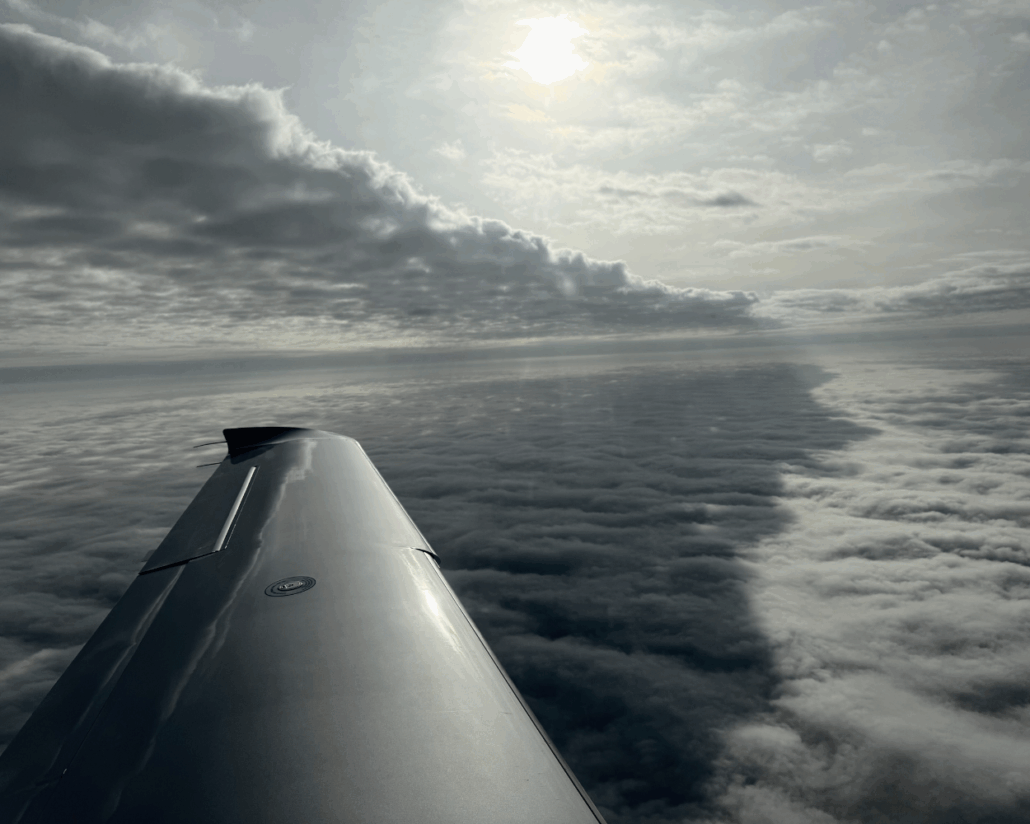
Icing: Awareness, Avoidance, and the IFR Pilot’s Escape Plan
|
Getting your Trinity Audio player ready...
|
Editor’s Note: Dr. Parvez Dara makes his IFR Focus debut with this article. An ATP-rated pilot, 10-time Master CFII, and Gold Seal instructor, Parvez serves with the MAPA Safety Foundation, S.A.F.E., and the FAA Safety Team. A former FAA CFI of the Year and Safety Team Representative of the Year, he writes extensively on flight safety and brings a unique risk-management perspective as a practicing physician.
 The first snowflake came down the atmospheric elevator shaft completely intact and brushed my face—and the GA pilot’s dread returned. “’Tis the season to be jolly” slowly morphed into weather-forecast management, ending in mostly VFR flights. An unsettling disruption to routine.
Icing, like thunderstorms, is not for mere mortals. It can ruin your day—much less your life. Having encountered icing in all four seasons, it evokes some fast–heart-rate negotiations with your Maker. Early in my flying career, a traversal into unknown icing at 15,000 feet in July left rime—like slime—all over the leading edges. I panicked and called ATC. They wanted to know the type, intensity, etc., and all I wanted was, “Get me outta here!” Descending to 13,000 feet got rid of it quickly. Oh, did I mention my M20M was equipped with a non‑FIKI TKS system at the time—and it wasn’t on? It was summer, after all. A mysterious gravity of existence in turmoil.
Another time, another flight at 15,000 feet from Dallas to New Jersey, I saw the windshield haze over with small pockmarks of ice crystals on the Bonanza. I looked at the leading edges and, sure enough, they were rough white on smooth white. I did not panic, but simply asked to descend to 13,000 feet, and voilà—the aircraft smoothed out and the IAS picked up a fraction. Experience teaches us the tricks of the trade. Yet another time, climbing through an unforecast icing layer at 7,000 feet with moderate-to-severe turbulence, was an eye-opening, neck‑whiplashing, shoulder‑in‑a‑sling event—safely negotiated by climbing to 12,000 feet in clear, smooth air.
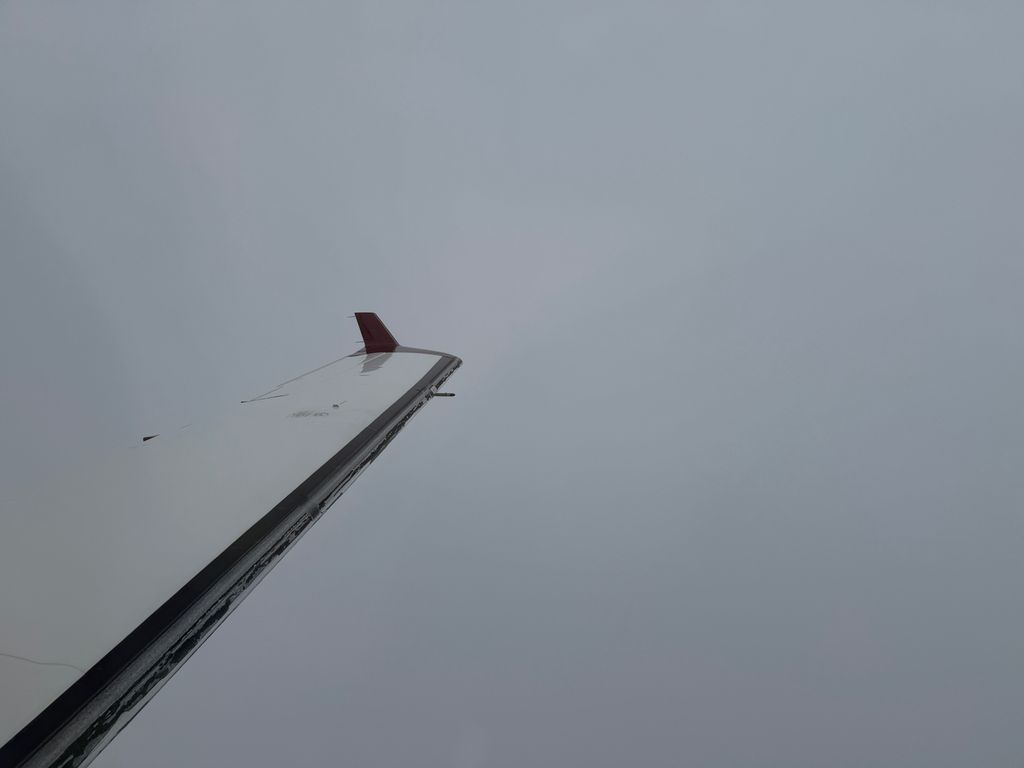
Icing is an atmospheric phenomenon imposed on human creation. The aircraft is a perfect example of a cold object flying inside clouds where supercooled water droplets find harbor. Ice accretion depends on both the shape and the speed of the object. To prove that theory, a few years back I was flying the Mooney while a relative flew four miles behind me at the same altitude in the clouds—both on IFR flight plans. I collected rime ice on the laminar wings of the Mooney while he skated through without a crystal on his A36 Bonanza. Both shape and speed matter. The faster the speed, the greater the potential accretion. The latticework of water (H₂O) can form a beautiful crystalline product over any cold aluminum structure, given two things: temperatures between 0 and −15°C and a cold surface.
Icing often accrues faster on the horizontal and vertical empennage than on the wings because of their thinner structures. So if you see ice on the windshield or the wing leading edge, keep in mind that it is likely enveloping the tail as well.
Types of Aircraft Icing
Three types of icing afflict fuel‑injected piston aircraft: rime ice (70%), clear ice (10%), and mixed ice (20%). In carbureted aircraft, there is also the risk of carburetor ice. The physics are simple: the throttle body restricts airflow, and as the air expands past it, the temperature drops—sometimes enough to freeze moisture. If airspeed diminishes or the engine begins to run rough, turn carb heat on immediately. Carbureted engines can ice up in temperatures ranging from +70°C down to −15°C.
Induction ice can also occur when air‑induction vents clog the filter, requiring pilot awareness and corrective action. Pitot heat should be on, and alternate air selected as needed so air can continue to support combustion. Structural icing, on the other hand, can affect every surface of the aircraft—especially protrusions such as antennas, the pitot tube, and air‑temperature probes. When an antenna becomes ice‑laden, a noticeable shudder can occur, and transmission and reception may degrade dramatically.
Icing Temperatures
On an IFR flight plan, if you find yourself near the 0 to −15°C temperature range, your first move should be to remove yourself from that environment. If able, climb 2,000 feet or descend 2,000 feet. In mountainous terrain, always ensure at least 2,000–3,000 feet above the MEA. Temperatures between −15°C and −40°C reduce the likelihood of icing, while below −40°C there is virtually no risk.
Rime ice forms most often in stratiform clouds and is typically greatest near the top of the cloud layer. It is white, grainy, and forms relatively evenly. Clear ice, by contrast, can build rapidly and form horns above and below the leading edge. These horns disrupt airflow, increase drag, raise stall speed, and force the wing to fly at a higher angle of attack—often accelerating the icing problem.
Imagine the wing at a higher angle of attack: airflow slides downward over the top surface, carrying moisture with it. That moisture can then impact the underside of the tailplane, loading the elevators with ice. Which brings us to stalls.
Stalls
There are two types of icing‑induced stalls: wing stalls and tailplane stalls. If confronted with a wing stall, the recovery mirrors a normal stall recovery—reduce angle of attack, add power if available, and regain airspeed. A tailplane stall is different and counterintuitive. The telltale signs include mushy controls and difficulty maintaining altitude. In this case, pull back slightly on the yoke and slow down. Recognition is key before initiating the correct response.
Weather
Cold fronts are particularly conducive to icing and can produce icing conditions more than 100 miles ahead of the front. They are often associated with unstable air and convective clouds that harbor clear ice. As moisture is lifted, droplets grow larger; when they enter colder air, they can remain supercooled and freeze on impact—creating clear ice. Warm fronts, meanwhile, can extend the icing threat 300 miles or more ahead of the boundary.
Avoidance is the key for GA aircraft, regardless of deicing equipment. Whether FIKI or non‑FIKI, the equipment is designed to help you escape icing—not to press on through it. Think of it as a “get out of jail” card. Never launch into known icing expecting the system to carry you safely through. Even large aircraft with sophisticated bleed‑air systems have been humbled by ice.
Quick Poll
Winter Flying and In‑Flight Strategy
Can you fly in winter? Absolutely. Monitor the weather, frontal positions, and their movement. Be especially cautious when cold fronts overrun warm fronts—these setups can be particularly hazardous. Maintain a healthy margin between the MEA and cloud layers. Remember that winter often brings stronger winds as the jet stream dips south, offering good easterly tailwinds and punishing westerly headwinds.
If you encounter icing, ask ATC for an immediate exit from the clouds. If that’s not possible, a 2,000–3,000‑foot altitude change may help. Seek warmer air to shed ice. If you must carry ice to the destination, plan a higher‑than‑normal approach speed, delay gear and flap extension, and consider a flap‑less landing. Extending flaps changes wing camber and can further load the tailplane, reducing elevator effectiveness. Flare close to the runway to avoid a sudden loss of lift just feet above the surface.
One overriding rule remains: find warmer air. That requires an intimate understanding of the forecast—fronts, freezing levels, winds aloft, and tools such as Skew‑T charts. Avoid missed approaches or diversions through freezing layers whenever possible.

Awareness
Preflight awareness is essential, but in flight, adhere to these fundamentals:
- Monitor airspeed—gradual decay is a warning sign.
- Monitor pitch—a rising pitch to hold altitude suggests loss of lift.
- Disconnect the autopilot and hand‑fly to prevent stalls or spins.
- Declare an emergency in moderate or severe icing to expedite help from ATC.
- Use angle of attack, if available—it is more reliable than airspeed in icing.
- Energize TKS prior to IFR flight in fall, winter, and spring so fluid is ready when you need it to get out of jail.
Awareness, avoidance, and decisive action remain the pilot’s best defenses against icing.
Let’s Test Your Knowledge

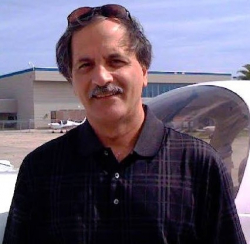
Parvez volunteers as a FAA Safety Team Representative and was honored with CFI of the year for the EA-17 Region in 2006 and as the region’s Safety Team Representative of the year for 2017. He writes about Flight Safety.
Parvez is a Medical Hematologist/Oncologist with an MBA degree.
- Icing: Awareness, Avoidance, and the IFR Pilot’s Escape Plan - January 9, 2026

Leave a Reply
Want to join the discussion?Feel free to contribute!