
A New Take on Alternates
|
Getting your Trinity Audio player ready...
|
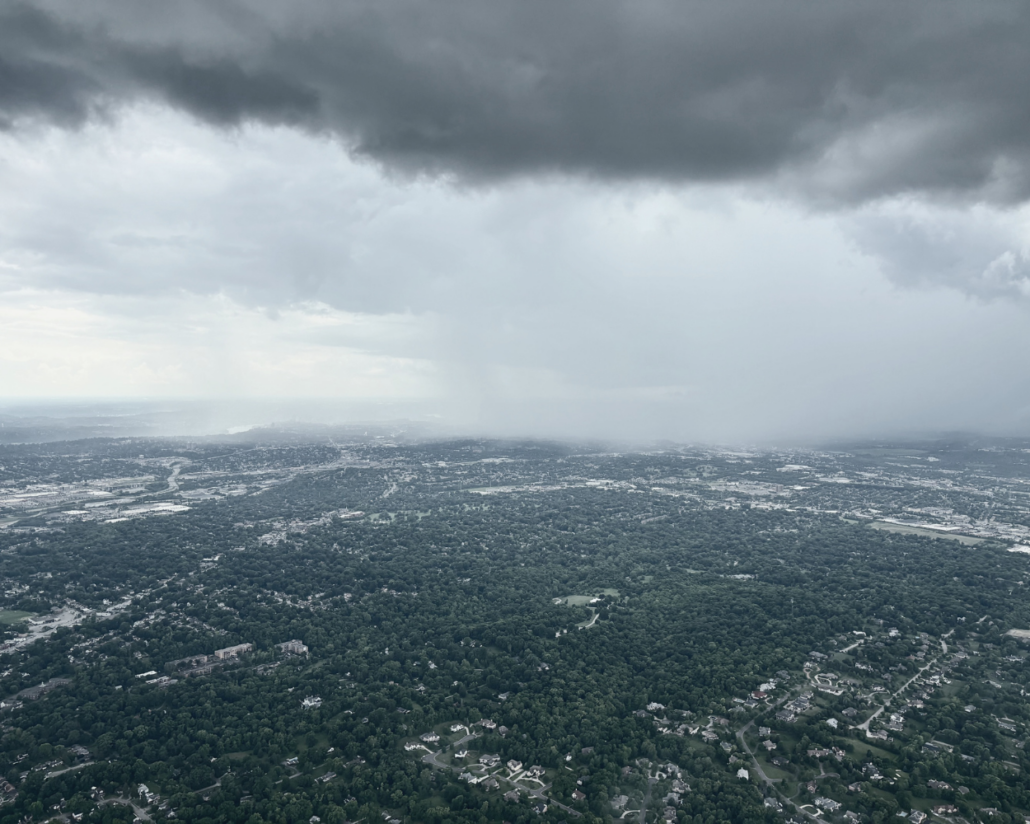
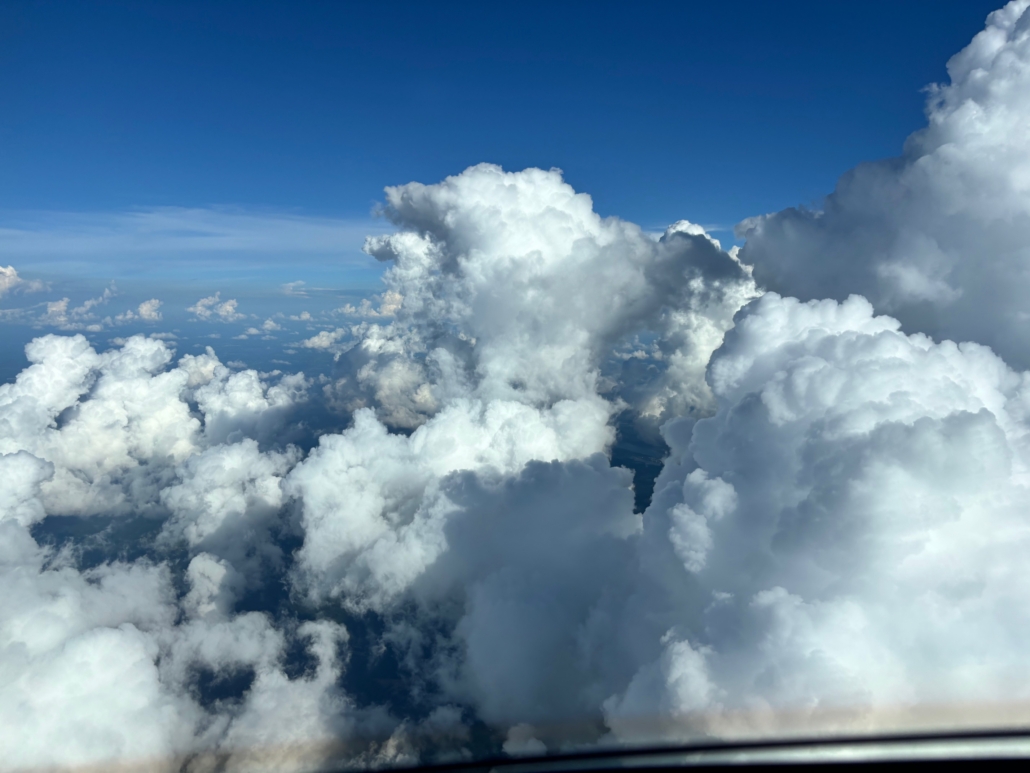
If you’ve ever been glad to be on the ground after fleeing dark clouds and heavy rain, you know just how unpredictable storms can be. They can pop out of a clear sky and grow quickly, forcing you to head in an unexpected direction—often further from both the destination and alternate. While it shouldn’t be a big deal to divert for weather, get-there-itis and other pressures can become dangerous distractions. One way of reducing stress while safely avoiding storms is to take a different approach to alternates.
Safe Havens
Filing an IFR alternate is often a check-the-box routine, and we do a good job of exceeding the weather requirements in 14 CFR §91.169. But filed alternates are often near the destination. We tend to mentally lock that into the mission, leaving us unprepared for big changes. Since you can divert anywhere you like once in flight, it’s better to view IFR alternates for what they are: for you, a backup near the destination when it works. For ATC, lost-comm procedures—knowing where you’ll go if you can’t reach the destination. That’s why the filed alternate isn’t normally apparent to controllers. Your weather alternates, then, are personal backups based on conditions rather than convenience. I call them “safe havens.”
We wise up to this concept pretty quickly in the Midwest, where unforecasted thunderstorms are common in the spring and summer. I’ve learned to assume they’ll develop with any signs of instability and plan accordingly—not just with a couple of alternates along the way, but a safe haven that is often well past the destination or along a different route. The plan includes having the fuel to get there. If that’s not practical, the result is a delay or no-go. A beautiful weekend in April was a good example. The day started out clear across three states, with the weather maps and a few TAFs showing a slight chance of thunderstorms. Yet I canceled a cross-country to northern Wisconsin because I was worried about getting back for an evening commitment. It was hard to believe, but a few hours later severe storms developed and spread well past the “chance of” areas. If I really had to make the trip, I would have planned an overnight at the destination—or at a safe haven. If the weather was still good and I made it home the same day, great.
IFR Refresher: Fuel Requirements (14 CFR §91.167)
- Fly to destination
- Then to alternate
- Then 45 minutes reserve
Reality check: That may not be enough when weather forces multiple deviations.
More is Better
Again, most of us exceed the regs in planning, and it’s common to have a personal minimum of one hour of fuel reserves. But there’s a big catch in the requirements under §91.167. It calls for enough fuel to “complete the flight to the first airport of intended landing…fly from that airport to the alternate airport” and have 45 minutes of cruise-flight reserve. Fuel to land, depart again, and fly to the alternate can require more fuel than you think, especially if you also account for weather diversions. It’s better to avoid tight fuel margins when planning alternates or safe havens—land for fuel where the weather’s great, not where you hit your maximum fuel range. Diverting is already high workload—would you rather make a leisurely stop with a visual approach, or press on into challenging weather and a possible missed approach with minimum fuel? I know some pilots who have no problem simply turning back for home if that’s their safe haven. They’ll plan a fix along the route as a fuel-status or continue/divert point if there’s potential for storms.
Of course, it’s not practical to analyze dozens of airports in five states in case you need one. So safe havens can be as easy as bookmarking an area with airports well away from weather hazards. During a multi-day trip back to the Midwest from Florida in an SR22, the convective potential prompted me to make an early fuel stop in Georgia to top off after just two hours in the air. An hour later, fast-growing storms moving east had already forced me to fly well away from the route and even back south before I could bypass the weather and head north again. In the meantime, I flew west for well over an hour to find a safe place to land, but I had the fuel and then some. And, if you like that glide ring on your EFB map, notice that it completely encircles your aircraft. Picture fuel-reserve rings around that and you have 360 degrees’ worth of options. Like the airline safety briefing, “the closest emergency exit may be behind you.”
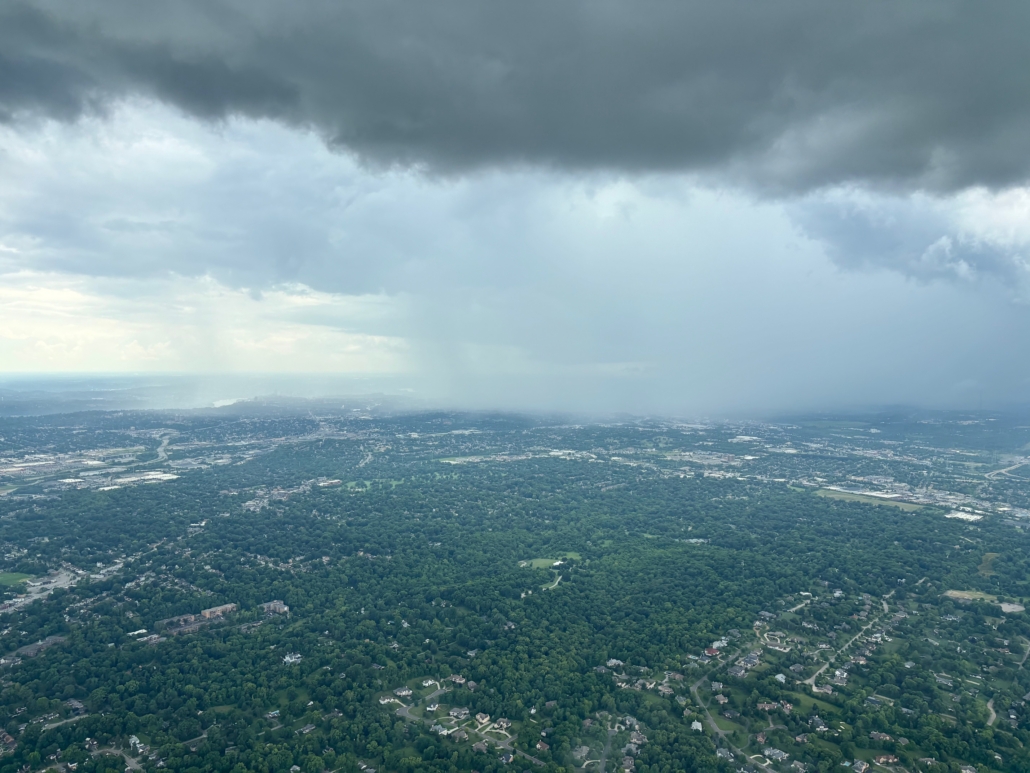
The closest emergency exit may be behind you.
Maximize Minimums
It’s also easy to be fooled by an airport reporting 10 miles visibility and clear skies, especially during surprise diversions. There could still be a storm cell developing 50 miles away. That’s all the more reason to stay in VMC when possible to be able to spot buildups in the distance. Be sure to use ATC resources and pilot reports to inquire about weather approaching an alternate, not just the alternate itself. I once stopped a mere 20 miles from home due to thunderstorms and heavy rain. It was so nice and clear at my present position that it was tempting to press on, but that would have meant entering IMC with no way to see the approaching line of weather. An airport I was familiar with was only a few miles off the left wing, so I decided to wait it out there. Safe inside, I inquired about a hangar for the night and texted a friend to get a ride back. Meanwhile, I watched the weather radar as a line of heavy rain passed over the destination, followed by clear skies. The timing turned out great, so I canceled the car ride and launched for the short flight home VFR.
Other tips:
- Treat each flight as unique, even routes you fly often, and consider different alternates.
- Adjust your personal limits and plan shorter legs when weather conditions are uncertain or include potential convective activity. Have a healthy skepticism of airport forecasts.
- Preflight and fly with the same mindset—look at the big picture while planning for what might be ahead. Don’t wait until the pressure to find an airport is high due to dwindling fuel or proximity to weather. High winds and turbulence can occur well before the rain in a thunderstorm arrives.
We now have the best tools yet to build flexibility into each flight plan. Just add a plan to manage weather risks—especially those that turn up unexpectedly. Whether you call them alternates or safe havens, be OK with changing routes and airports to allow for flying a normal approach and landing well within your skill set. If you decide you’re OK with the idea of landing far from the destination, you have the mindset it takes to manage the risks of unpredictable hazards like thunderstorms.

- Keeping up: Managing Busy Airspace - September 9, 2026
- Into the Clouds: Hazards in Your Head - July 7, 2026
- A New Take on Alternates - May 12, 2026

Very good approach to dealing with wx.
For slower moving but widespread hazards like fog, evening narrows dew point spread and twilight is brief as low sun is blocked. To keep from picking a “sucker hole” divert that may be about to join the other LIFR fields nearby, zoom out your nexrad wx picture, look for the region of VMC metars/tafs, not the one MVFR/IFR holdout in a sea of red/pink…when all that was available was voice/printouts, that choice wasn’t nearly as obvious.
…and if it was a later afternoon/evening clearing behind a line of rain/convection, be wary of all that remaining moisture as dew points narrow
Great advice, written artfully. I fly with a similar mindset.
When I plan safe havens on a long cross country flight, I like to pick places I’ve never visited. That way, I get to experience a new airport (or city, if I get stuck there). Last year, when flying a leg from Milwaukee to Sioux Falls, a huge line of thunderstorms popped up on Sirius XM. I pointed this out to my wife and said, “How about we divert to Kansas City?”. We made a left turn near Des Moines, landed downtown KC at Wheeler Field, and then enjoyed two days of exploring (and eating the best BBQ!) in a great city we’d never visited before.
Excellent article reinforcing fundamental mindset and advance planning. Brings back memories of spending a day in Indiana while attempting a VFR return to WI from OH. The unexpected and decision-confirming bonus was when about 20 other pilots made the unexpected diversion decision—resulting in a fabulous collection of show-worthy aircraft enroute to EAA a few years ago (nevermind that the unforecasted strong storms kept us all from walking outside to see them up close, lol)