
The Checkride Was the Easy Part: Moving Beyond Certification to Operational Mastery
Editor’s Note: Welcoming Tim Decker to IFR Focus
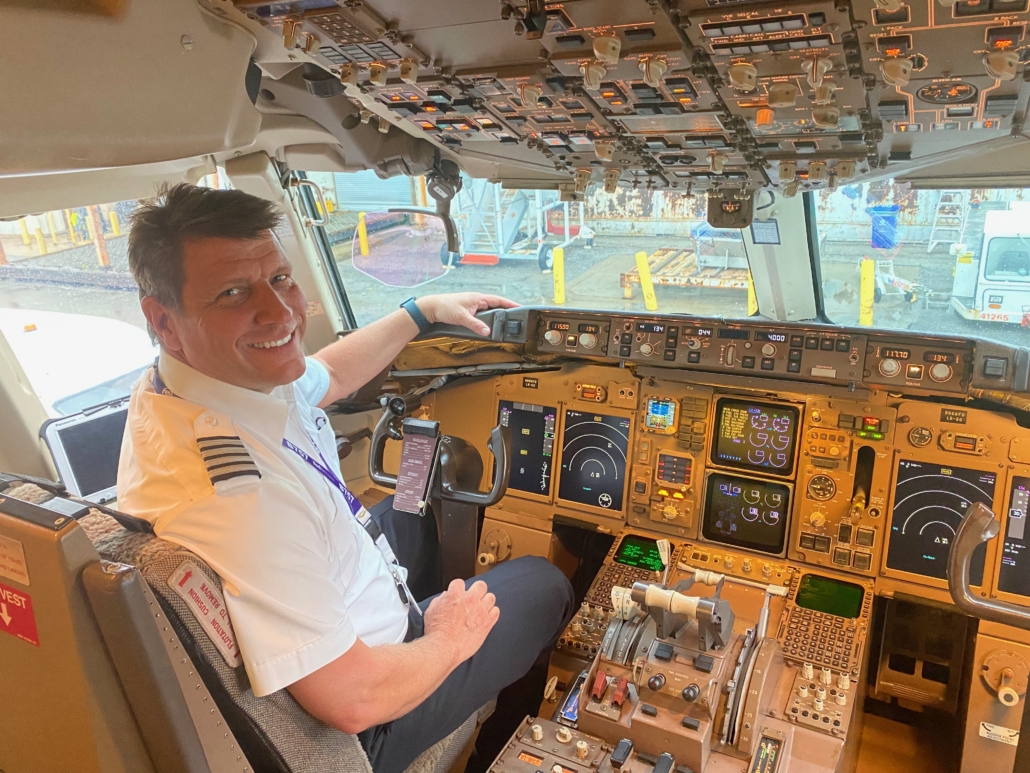
IFR Focus welcomes Capt. Tim Decker
We’re thrilled to welcome Capt. Tim Decker as a contributor to IFR Focus. Tim brings an extraordinary depth of experience spanning military, corporate, and airline aviation, combined with a deep passion for mentoring general aviation pilots.
A retired U.S. Air Force pilot, Tim’s military career includes flying iconic aircraft like the U-2 and F-117 Nighthawk. Today, he serves as a Boeing 757 Captain for FedEx, accumulating more than 16,000 total flight hours over his career. But despite his extensive jet time, Tim remains deeply rooted in the general aviation community as a longtime Cirrus SR22 owner, CFI, CFII, and MEI.
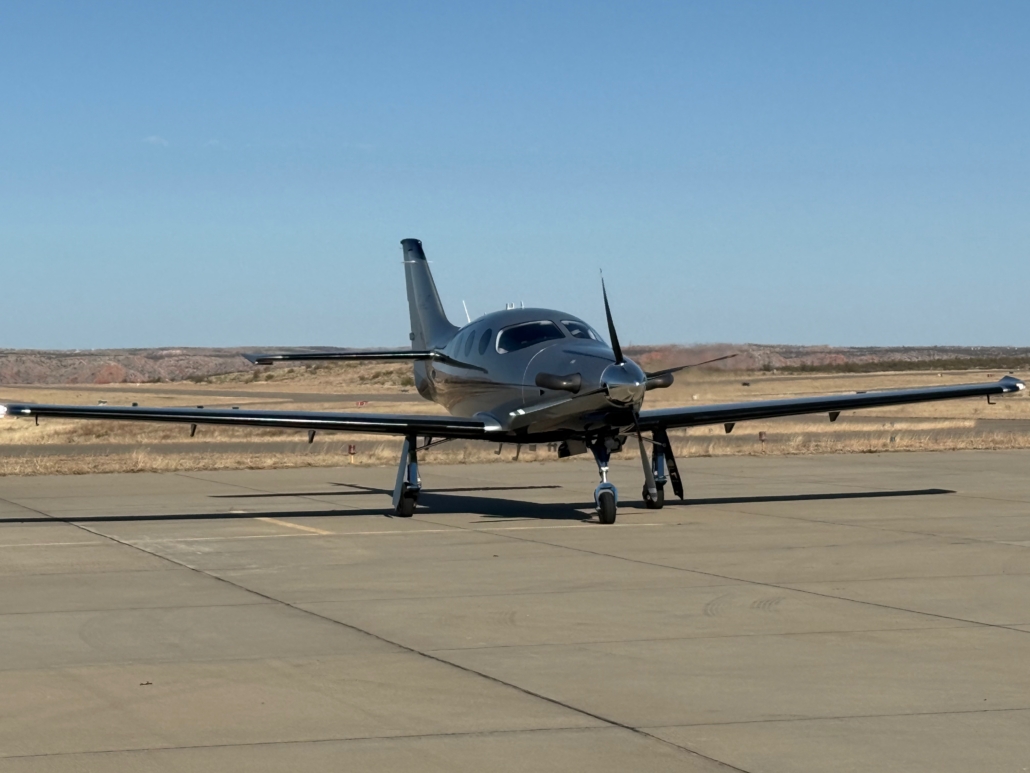
Tim specializes in helping owner-pilots transition safely and confidently into high-performance turbine aircraft. He is a Cirrus Vision Jet mentor pilot and instructor, an Epic E1000 factory-trained instructor, and a HondaJet type-rated pilot. His instructional focus bridges the gap between different worlds, taking the rigorous standardization, risk management, and disciplined decision-making found in airline and military cockpits and making them practical for single-pilot Part 91 operations.
Based in Nashville, Tennessee, Tim is dedicated to helping pilots develop true operational mastery in the real-world IFR system. We are proud to feature his unique perspective at IFR Focus, and we know our readers will benefit immensely from his insights in this and future articles.

The Checkride Was the Easy Part: Moving Beyond Certification to Operational Mastery
Passing the checkride proves you can fly the airplane. Operating it safely in the real world is a different challenge altogether.
by Tim Decker
Passing a checkride is a significant accomplishment. Whether it’s an instrument rating, a commercial certificate, a type rating, or an ATP, the successful applicant has demonstrated the knowledge, skill, and judgment required to meet established standards. Most pilots understand that earning a certificate doesn’t mark the end of their development. What often comes as a surprise, however, is how different real-world operations feel from the controlled environment of a practical test or simulator session.
A checkride demonstrates proficiency under evaluation standards. Real-world flying requires pilots to apply those same skills while managing changing weather, passenger expectations, operational pressures, unfamiliar airports, and evolving ATC clearances. This boundary between demonstrated proficiency and operational proficiency is where some of aviation’s most valuable learning occurs.
I was reminded of this recently when a fully qualified pilot who had just completed training in a high-performance turbine aircraft asked me to accompany him on a cross-country flight. The summer weather featured widespread convective activity along the route—nothing unusual for IFR flying, but enough to require some tactical thought.
Before filing, he asked me to review his flight plan, which was routed direct to the destination. Looking at the weather, I saw an area of green and yellow precipitation with an occasional patch of red along his line. There was no lightning, but it was an area that would almost certainly require tactical decision-making in IMC.
I suggested an alternate route via a VOR located approximately 30 degrees off course. It added only a modest amount of distance but kept us completely clear of the weather.
His response was reasonable: “Why don’t we just go direct and ask for deviations if we need them? There’s no lightning showing.” He wasn’t wrong; that plan probably would have worked. But I told him that wasn’t how a professional dispatcher would file the flight for an airline crew.
A dispatcher wouldn’t intentionally launch a flight toward an area where deviations are likely. Instead, they file the route most likely to produce an uneventful flight from the beginning. The goal isn’t simply to complete the flight safely; it is to do so while minimizing workload, reducing uncertainty, preserving options, and enhancing passenger comfort.
The revised route was a perfect example of what good aeronautical decision-making should accomplish. It was safe, legal, and efficient. Several hours later, while cruising comfortably along our weather-free route, the pilot looked toward his original path and simply said, “I’m glad we’re not over there.” The flight was uneventful, and that’s exactly the point. The best decisions prevent problems from developing in the first place.
Beyond the Checkride
The FAA’s training standards do an excellent job evaluating whether a pilot can perform specific tasks, like flying an approach or managing an emergency. These skills form the essential foundation of safe flight. But real-world IFR flying involves the gap that exists between certification and operational proficiency.
Training programs teach pilots how to meet established standards. Real-world flying requires them to apply those skills in dynamic environments where the correct answer is rarely obvious and judgment becomes just as important as aircraft control. The question isn’t just whether you can fly the approach, but whether you can safely manage everything happening around it. Can you recognize a weather threat early? Stay ahead of changing clearances? Identify when your workload is exceeding capacity?
Throughout my career—whether flying military aircraft, corporate jets, airliners, or mentoring owner-pilots—I’ve observed the same pattern: Most mistakes don’t begin with a loss of aircraft control. They begin with a loss of operational control.
Managing Workload, Automation, and Situational Awareness
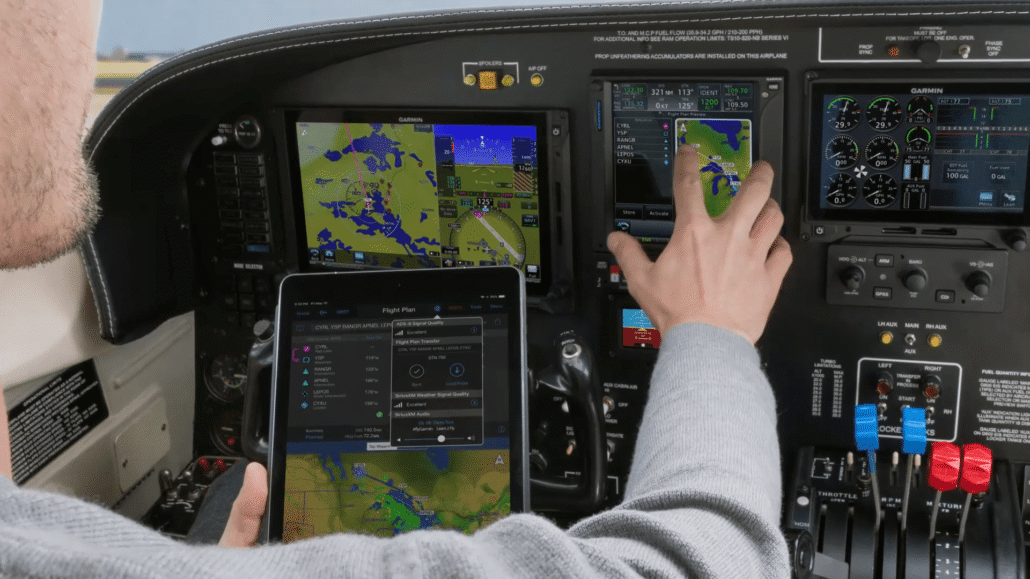 Many pilots think of workload as something that happens to them, but professional pilots view it as something to be managed or prevented. Consider how things unravel during an IFR flight: a pilot becomes occupied with weather, falls behind the avionics, rushes the approach briefing, misses a radio call, and suddenly finds himself reacting to events instead of anticipating them. The airplane may still be under control, but the operation is no longer being managed.
One of the most effective ways to improve safety is to reduce workload before the flight ever begins, just like our weather-routing decision. Professional pilots constantly look for ways to simplify the operation because they understand that mental capacity is a finite resource.
The same principle applies to automation. Today’s owner-pilot has access to technology—flight directors, synthetic vision, datalink weather, and sophisticated autopilots—that airline crews a generation ago could only dream about. But automation is still just a tool. The challenge isn’t learning how to use it; it’s learning how to manage it.
A pilot transitioning into turbine aircraft once shared a great observation: the most important skill isn’t mastering a specific procedure, but maintaining situational awareness throughout every phase of flight. Success ultimately comes down to consistently answering three questions:
-
What is the airplane doing?
-
What is the automation doing?
-
What should happen next?
In the airline world, we refer to this as Flight Path Management. Pilots who can consistently answer these questions are rarely surprised by the aircraft or the operation.

The Missing Link: Mentorship
Experience and judgment are difficult to teach in a classroom. They develop through exposure. In military aviation, new pilots fly alongside experienced flight leads who help them develop decision-making skills, followed by a detailed debrief.
Civilian airline aviation follows a similar model. A pilot may arrive with 1,500 hours, but they still undergo rigorous simulator training and then enter Initial Operating Experience (IOE), flying alongside a Line Check Airman before being released to fly with a regular Captain. The industry understands that certification does not equal mastery.
Yet, owner-pilots often complete training and immediately begin operating sophisticated aircraft single-pilot in busy airspace and challenging weather with no Captain sitting next to them. As a result, Single-Pilot Resource Management (SRM) becomes one of the most critical skills an owner-pilot can develop.
Interestingly, aviation insurance underwriters have reached the same conclusion. When pilots transition into high-performance aircraft, insurance requirements often include mentor-pilot time and operational restrictions. These are not arbitrary; they are based on decades of actuarial data showing where pilots are most vulnerable. A mentor isn’t there to fly the airplane; they are there to help accelerate the development of judgment by teaching you how experienced pilots think.
Building Your Professional Development Program
Fortunately, owner-pilots don’t have to figure this out alone. Type clubs and type-specific organizations (such as COPA, BPPP, VPO, and CJP) provide access to experienced instructors, standardized operating practices, scenario-based training, and a community willing to share lessons learned.
My recommendation is simple: join them, attend their events, and fly with their instructors. More importantly, build ongoing relationships with mentors you trust. Call them when you’re planning a challenging trip, and consider hiring them periodically to accompany you on real-world flights where learning can occur in your actual operating environment.
Another significant difference between professional aviation and general aviation is the frequency of recurrent training. In the commercial world, proficiency is viewed as perishable. Yet many GA pilots receive little formal training beyond the legal requirement of a Flight Review every two years.
If you are routinely flying family, friends, or business associates through the IFR system, I encourage you to hold yourself to a higher standard. Seek training every six to nine months, use simulators when available, and schedule mentorship flights focused purely on improving operational decision-making.
The Real Goal
Pilots often pursue the next rating or credential believing it will inherently make them safer. Training and certificates matter, but the real goal is becoming the kind of pilot who consistently prevents problems from developing in the first place.
Whether you’re flying a Skyhawk, a Bonanza, a Cirrus, a turbine aircraft, or an airliner, the fundamentals remain the same: manage your workload, use automation wisely, stay ahead of the airplane, and train more often than the regulations require. A checkride demonstrates proficiency under evaluation standards, but the rest of your aviation career should be spent developing true operational proficiency in the real world.
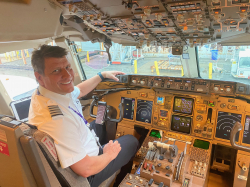
Tim helps pilots bridge the gap between earning an instrument rating and developing the operational proficiency needed for real-world IFR flying. His focus is on building the judgment, decision-making, and operational proficiency required to operate safely, legally, and efficiently in today’s National Airspace System.
Tim is passionate about mentoring owner-pilots and helping them apply the same practical techniques used in military, corporate, and airline flying to everyday Part 91 IFR operations.
Visit TimDeckerAviation.com to learn more.
- The Instrument Cross-Check Is Bigger Than You Think - October 6, 2026
- Before the Frequency Gets Busy - September 1, 2026
- The Checkride Was the Easy Part: Moving Beyond Certification to Operational Mastery - June 30, 2026

Leave a Reply
Want to join the discussion?Feel free to contribute!