
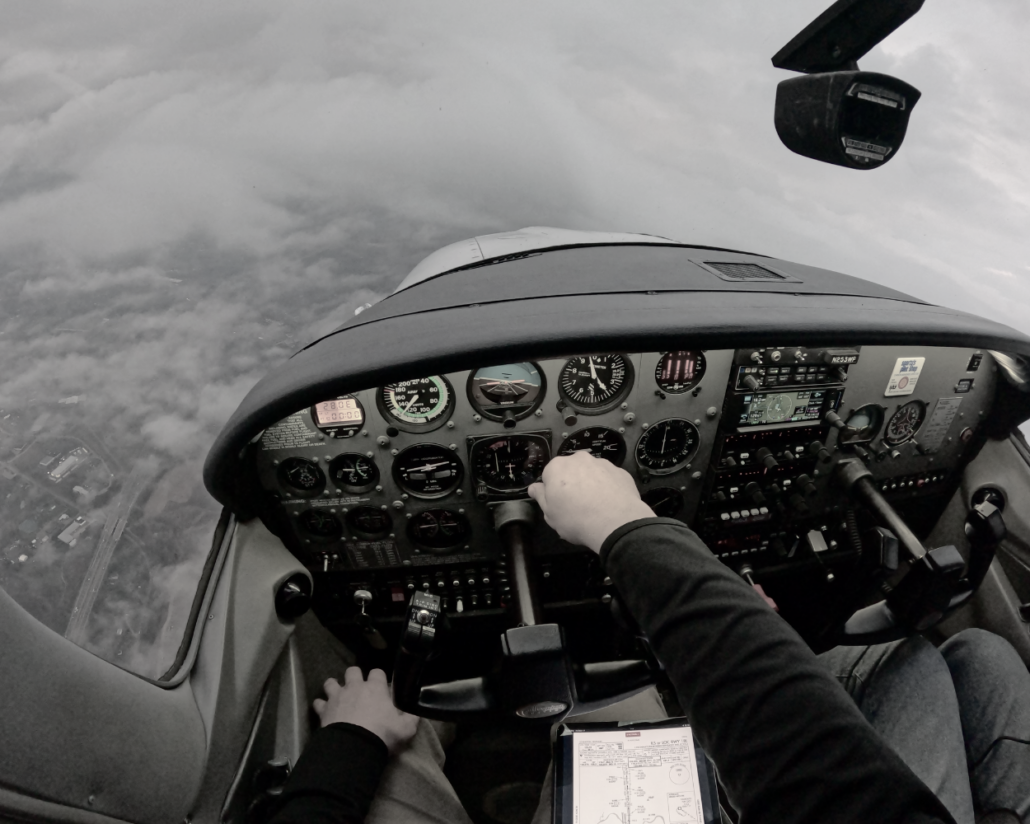
Practical IFR: Activate in the Air
|
Getting your Trinity Audio player ready...
|
I fly out of a small, nontowered airport (KLDJ) tucked under the New York Area Class B. If I can depart Runway 27, I can get my clearance and release in about 5 minutes. However, if I tell them I’m departing Runway 9, I’ll get an indefinite hold for release because of landing traffic at Newark. By indefinite, I mean “infinite.” It will never happen.
I know I could depart and pick up an IFR clearance in the air. But that creates a dangerous scud-running scenario if the weather is marginal. And I’ve found it’s essentially impossible to pick up a clearance airborne near NYC.
Is there a remedy for this when I must depart Runway 9 due to winds?
— Arian R.
It’s easy to see why Runway 9 departures from Linden (KLDJ) are basically a non-starter. There’s no way Newark will create the gap to make a space for you. If Newark is using the Runway 4 group, it would be a gap in their arrivals for your departure. If it’s the Runway 22 group, you could interfere with normal departures and a potential missed approach from a Newark arrival. Fuhgeddaboudit.
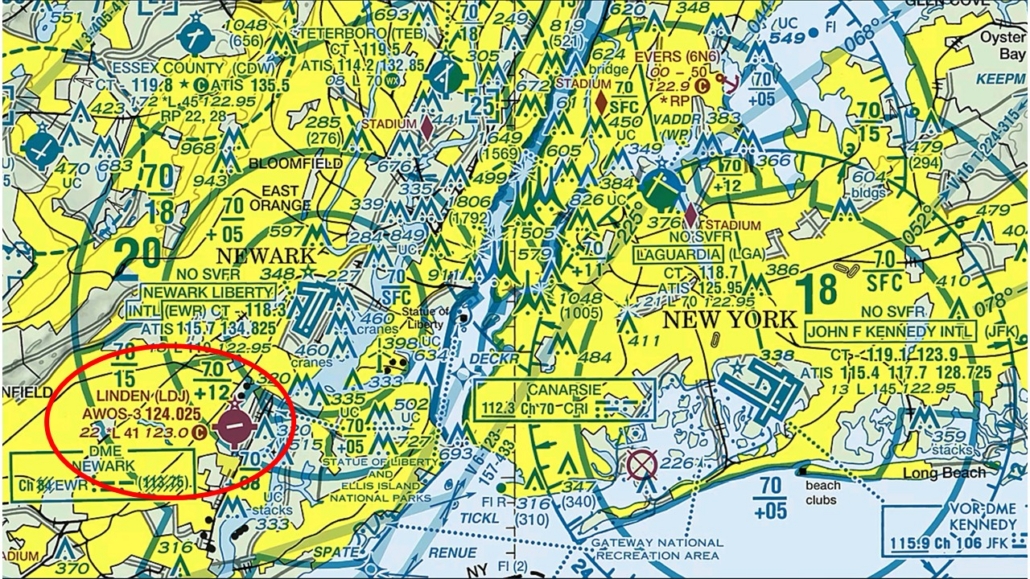
That’s why your best option for an IFR departure from Linden is off Runway 27. You’re pointing away from Newark. Sure, there’s other airspace out there that has to be clear for you, but New York area controllers handle that kind of airplane Tetris all day.
However, there are two other options besides departing VFR and attempting an IFR clearance in the air. One of them is routinely approved for airports near Linden. I know because I have friends who fly there. But it requires at least marginal VFR weather. The other would require some willingness from Newark, but could work in weather that’s lower than the minimum for VFR flight in Class E airspace.
IFR Clearance, VFR Departure
If you feel confident you can remain safely VFR for several minutes after departure, you can request your IFR clearance on the ground with a request for a VFR departure to activate IFR in the air. You’d get the clearance in the normal CRAFT format, plus a release to depart VFR. You would depart squawking your assigned transponder code (not 1200) and comply with any restrictions ATC imposed on heading and altitude (if any). Once airborne, you contact Departure, radar identify, and get an acknowledgment that you can now “consider yourself IFR.” At that point, you can enter IMC and be on your way. You must remain VFR until then.
Departing VFR to pick up an IFR clearance in the air isn’t the same as departing VFR with your IFR clearance already issued. In the latter case, ATC has your clearance information, and you can activate IFR once airborne and in contact with the appropriate controller. You must remain VFR until then.
This is different from getting the clearance in the air as you already have all the information in the clearance, Departure is expecting you, and your airplane will tag up on radar right away because you’re already squawking a discrete code.
Some say this technique is a grey area. I’d say it’s more off white. The relevant part of the controller bible (J.O. 7110.65) is 4-3-9. VFR RELEASE OF IFR DEPARTURE.
When an aircraft which has filed an IFR flight plan requests a VFR departure through a terminal facility, FSS, ARTCC Flight Data Unit, or air/ground communications station:
After obtaining, if necessary, approval from the facility/sector responsible for issuing the IFR clearance, you may authorize an IFR flight planned aircraft to depart VFR. Inform the pilot of the proper frequency and, if appropriate, where or when to contact the facility responsible for issuing the clearance.
PHRASEOLOGY—
VFR DEPARTURE AUTHORIZED. CONTACT (facility) ON (frequency) AT (location or time if required) FOR CLEARANCE.
If the facility/sector responsible for issuing the clearance is unable to issue a clearance, inform the pilot, and suggest that the delay be taken on the ground. If the pilot insists upon taking off VFR and obtaining an IFR clearance in the air, inform the facility/sector holding the flight plan of the pilot’s intentions and, if possible, the VFR departure time.
If read exactly as worded, it would mean you planned to depart VFR and pick up the clearance in its entirety once airborne. You actually don’t need any permission to do that—people do it all the time. You depart on a 1200 squawk and call ATC soon after. You get your entire clearance while flying, radar ID, and are immediately active IFR because you’re already flying. But, as you mentioned, ATC may be too busy.
That said, there is a small advantage to calling ATC on the ground and giving them a heads up that you’re departing VFR and planning to get your clearance once you’re underway. There is some coordination that might be needed between facilities. And if you were departing a towered airport with a flight plan on file but you didn’t get the clearance, they might cancel it. At the very least it would be confusing.
What I’m talking about, and have done successfully myself, is this approved FAA procedure with “Since we’re already talking to each other, let’s get a few things out of the way before you actually depart.” Departing with your clearance already issued—but not activated—makes life much easier for you, and nominally easier for ATC. Once you contact them airborne, the only thing remaining to do is radar ID. This also shortens the time you must remain VFR.
Some ATC facilities won’t play ball on this, either by local procedures or culture. I’ve heard that Las Vegas isn’t so keen on activation in the air. But then, it’s often sunny there, so maybe it doesn’t come up much.
IFR Clearance, IFR Departure in Class G
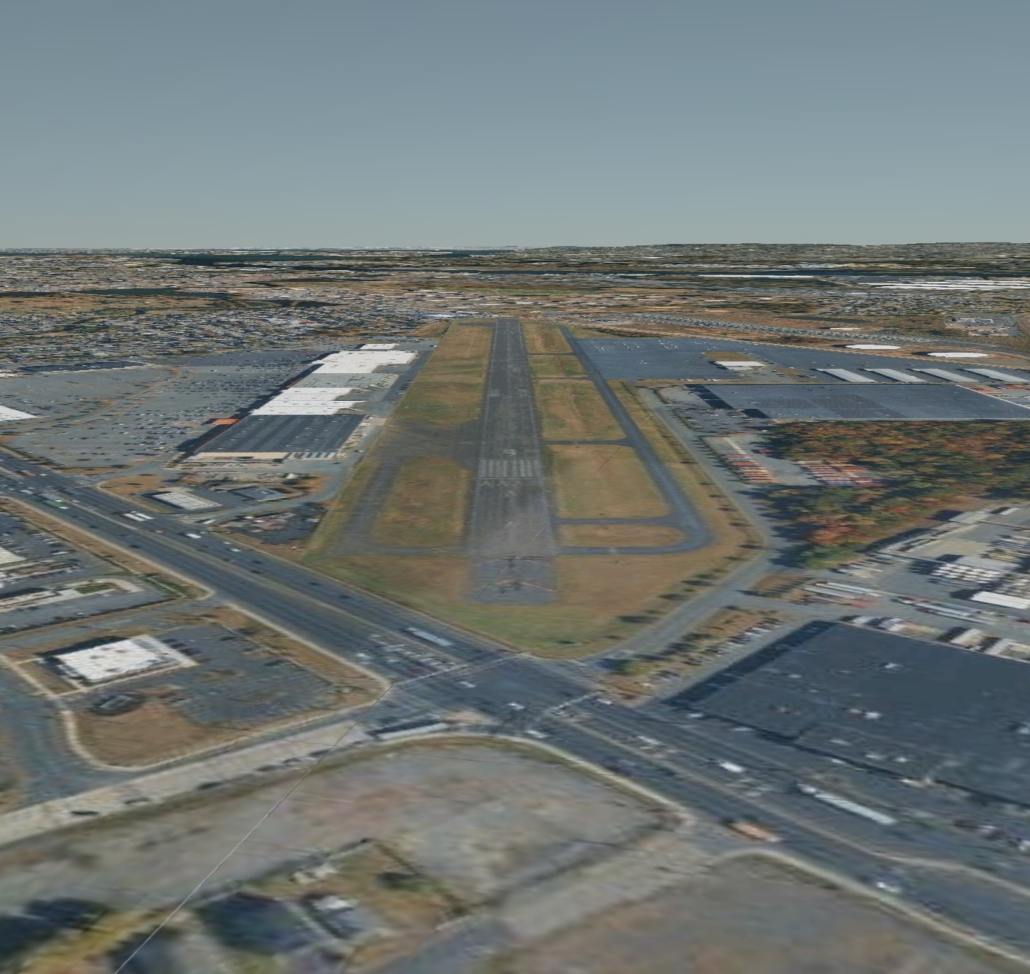
If the ceilings and visibility are high enough, you could depart Runway 9 and turn around to get heading 270 before you climb above 700 AGL.
The other option could work when you have sub-VFR conditions, but it’s good enough to depart visually and turn around. Linden is Class G airspace from the surface to 700 AGL. ATC can’t dictate what you do in that airspace. So if the ceilings and vis are high enough that you could depart Runway 9 and turn around to get heading 270 before you climb above 700 AGL, you would be doing the same thing from an ATC perspective as departing Runway 27.
The advantage here is that you’re IFR from takeoff, so you could go IMC as soon as you’re turned around and clear of obstacles. The catch is ATC would have to play along. Worth asking though. It might even vary controller to controller.
You would request your IFR clearance saying you can “enter controlled airspace heading 270.” If the controller asks what runway you’d be departing … well, I might try and avoid saying “departing Runway 9” in case the very words give someone hives. I’d answer with, “I’ll have to depart and turn around right away before entering controlled airspace, but I can definitely enter controlled airspace heading 270 off Linden.”
I don’t know if the system would see you lifting off Runway 9 and anticipate a conflict with Newark traffic before you could make the 180. Of course, there could be some local procedures that preclude one or both of these options off Linden, even if it is allowed only a few miles away.
One last thought: The only approach to Linden has a circling minimum of 600 feet AGL (basically). The departure procedure for Linden says NA for both runways due to obstacles. That certainly hints there are obstacles out there you’d best be able to avoid visually until you climb 600 feet.
But if this is your home airport, presumably you know the local hazards well.

For 19 years, Jeff ran many noteworthy aviation media projects with his own firm, Van West Communications, including magazines, books, videos and live seminars. Jeff previously served as editor-in-chief of IFR Magazine and co-editor of Aviation Consumer, and his work appears in AOPA Pilot, Flight Training Magazine, Plane and Pilot, and AVweb. He’s an experienced CFII/MEI with ratings for single- and multi-engine airplanes, seaplanes, and gliders. Jeff was the creator of the first pilot transition program for new Cirrus aircraft.
- Practical IFR: Activate in the Air - October 20, 2026
- Practical IFR: The Contact Approach - September 15, 2026
- Practical IFR: The Extra Step-down - August 18, 2026

Leave a Reply
Want to join the discussion?Feel free to contribute!