
Practical IFR: The Contact Approach
|
Getting your Trinity Audio player ready...
|
The Plan? Fly Two Approaches at Once, Of Course
I never liked the saying, “plan the flight and fly the plan.” Most GA flying requires bending the plan to fit the reality of the moment—or ends with the breaking of something valuable. When the aircraft capabilities are limited and crew resource management consists of talking to oneself, flexibility is king.
A more useful statement might be, “plan the flight to have a plan.” These days of iPad route planning and magenta lines allow perilous absence of forethought. This was hammered home to me one day while climbing VFR towards my GPS-direct course. I realized I had absolutely no idea what heading that was. I just knew it was up and to the left. That’s not a plan. That’s tagging along for the ride.
The right plan enables flexibility by providing options, yet constraining them within safe boundaries. A perfect example of this is the under-appreciated contact approach.
See and Avoid
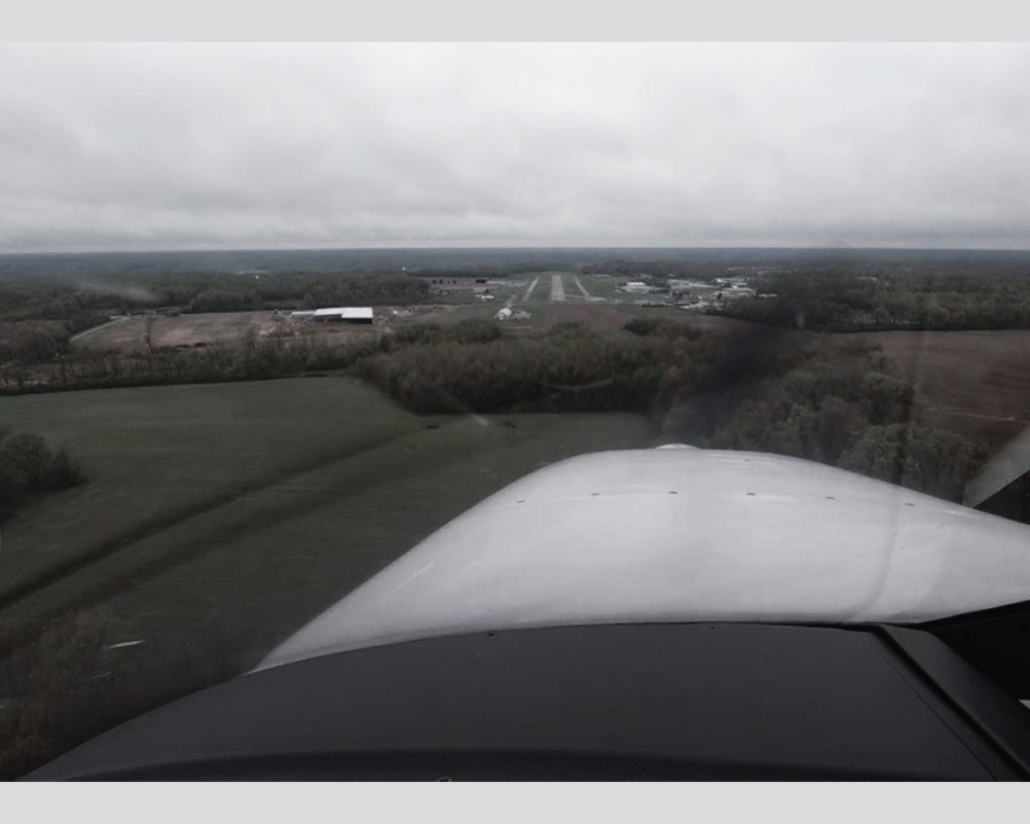
 Simply put, a Contact Approach lets you keep your IFR clearance and find your own path to the runway. The requirements are remaining clear of clouds with a mile visibility and not dying as you get to the pavement.
Suppose you’re approaching an airport from the south that has only one published approach coming in from the north. As you fly over the airport, you see the runway and a clear path to descend and join final. Requesting and receiving a clearance for a contact approach lets you descend and land without trucking miles past your destination only to turn around and come back.
However, you can request a contact approach and still fly most or all of a published approach as you see fit, so long as you stay visual. You don’t even need the destination airport in sight. Imagine cruising along on an intermediate leg of a published approach that’s taking you in and out of clouds with turbulence or icing.
When you’re in the clear, request a contact approach. Once granted, you can avoid the clouds with climbs, descents, or deviations left or right of the approach course. You could still follow a published segment to help find the airport, but 400 feet lower, or a mile right of course.
Doesn’t that remove obstacle protection? Absolutely. You’re now responsible for staying out of trouble, but that might be easy in visual conditions, as they exist on a particular day.
The freedom is similar to a Special VFR clearance, however, you’re still legally IFR. Special VFR clearances are for specific blocks of airspace: the Class D surface area around a towered airport or a Class E surface area around an uncontrolled airport. Technically, the pilot has no less-than-VFR freedom outside that airspace. The contact approach clearance covers operation in any controlled airspace.
Staying IFR also keeps an IMC escape hatch open for you: With a Special VFR clearance, reentering the clouds would be an emergency; with a contact approach, it’s just a missed.
Well, it’s a missed without a procedure, which means the onus is on you to stay out of the rocks and get back to ATC immediately. Contact approaches shouldn’t end with reentering IMC, but if you have a general plan you’ll be ready for that corner case.
Which all brings us back to planning for flexibility. Flying IFR on good-weather days, you should be ready for the visual. On marginal days, you can fly the charted black lines to your destination airport but be ready for a switch to a contact approach in case the situation warrants it. That’s what masterful use of the system is all about.
Educating ATC
While most controllers are happy to offload responsibility to you and clear you for the contact approach, some controllers meet a request with, “Confirm you’re cancelling IFR?”
Whether they forgot that part of the ATC operating guidelines or just aren’t enthusiastic for something out of the ordinary, you may have to clarify. “I’m staying IFR. I’m requesting a contact approach, which is like a visual but requested by the pilot and only needs a mile visibility.”
The silence following may be them asking around the control room. Hopefully, your clearance will come back, along with all the flexibility it allows.
Reader Poll

For 19 years, Jeff ran many noteworthy aviation media projects with his own firm, Van West Communications, including magazines, books, videos and live seminars. Jeff previously served as editor-in-chief of IFR Magazine and co-editor of Aviation Consumer, and his work appears in AOPA Pilot, Flight Training Magazine, Plane and Pilot, and AVweb. He’s an experienced CFII/MEI with ratings for single- and multi-engine airplanes, seaplanes, and gliders. Jeff was the creator of the first pilot transition program for new Cirrus aircraft.
- Practical IFR: The Contact Approach - September 15, 2026
- Practical IFR: The Extra Step-down - August 18, 2026
- What’s Wrong? Flying the RNAV 24 at Toledo in a Bonanza - August 7, 2026

Leave a Reply
Want to join the discussion?Feel free to contribute!