
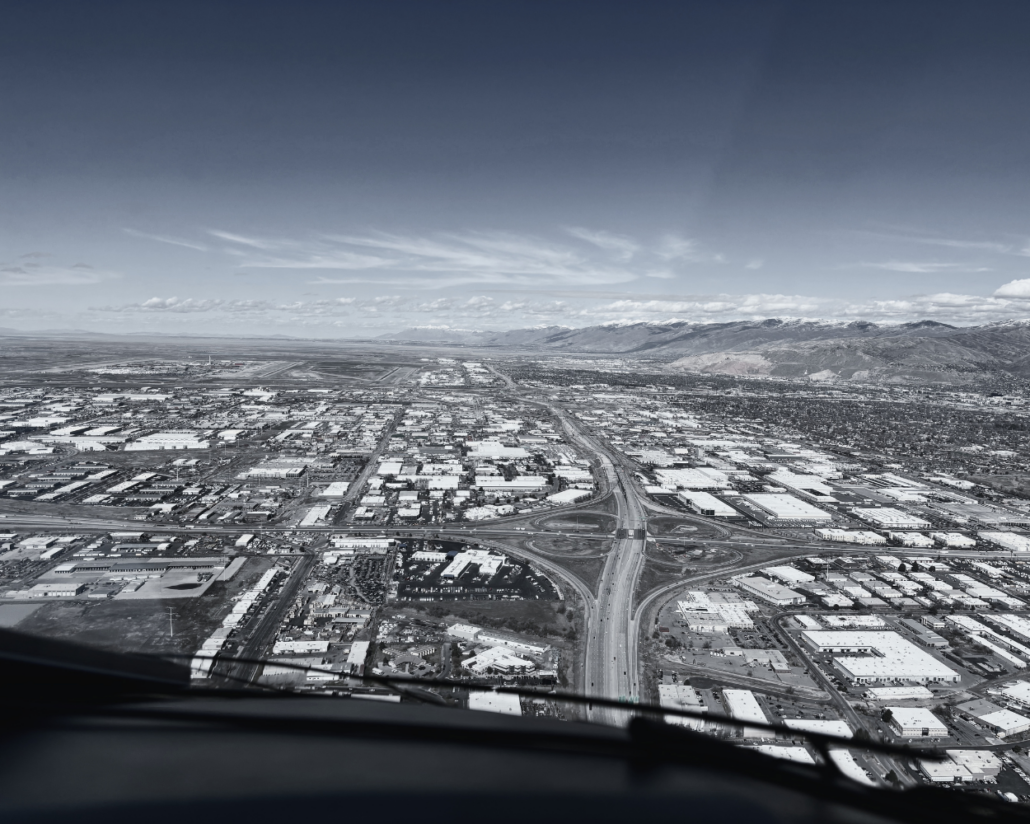
Keeping up: Managing Busy Airspace
|
Getting your Trinity Audio player ready...
|
Flying on instruments into big cities is a great way to use the rating – you’re always on a published IFR procedure, guided by ATC. You can land right in the metro area, close to transportation and destination options. Pilots based under a Class B shelf or at a high-traffic Class C airport are probably familiar with these perks and are used to busy airspace. For those who fly in quieter environments, though, “big and busy” can seem overwhelming. But it’s well within any IFR pilot’s capabilities if treated like challenging weather or a new aircraft – using training, preparation, and personal minimums to expand the envelope safely.

Routing and Orientation
Let’s begin by pointing out that flying IFR into Bravo airspace isn’t as scary as you might think once you see the process. Start with routing, and know that STARs (Standard Terminal Arrivals) and SIDs (Standard Instrument Departures) are your friends. If you learned that small aircraft can file “No STARs/SIDs” and get away with it, that’s only partly true and depends on the airspace. This remark on the flight plan can be disregarded and often is – more on that later. Or it can cost you a lot of avgas because ATC will vector you around other aircraft flying those procedures.
With that in mind, let’s go to St. Louis Regional (KALN), just under the Class B shelf for Lambert International (KSTL). Check the weather and where the airline traffic is flowing to get an idea of where Approach is directing traffic to satellite airports. Also look at recently cleared routes to help file a feasible flight plan. Include an early fix from a STAR if it fits your arrival direction. Even if a procedure has speeds and altitudes for turbines or is labeled so, waypoints on these routes can be assigned to pistons at lower altitudes. For St. Louis Regional, there are two STARs. Coming from the north, you might use all or some of FARMR THREE. This is shared among other nearby airports, so be sure to find “St. Louis Regional” for designated runways using the STAR. If you expect the RNAV 11, notice that the STAR instructions include FASHE, an initial fix to the approach.
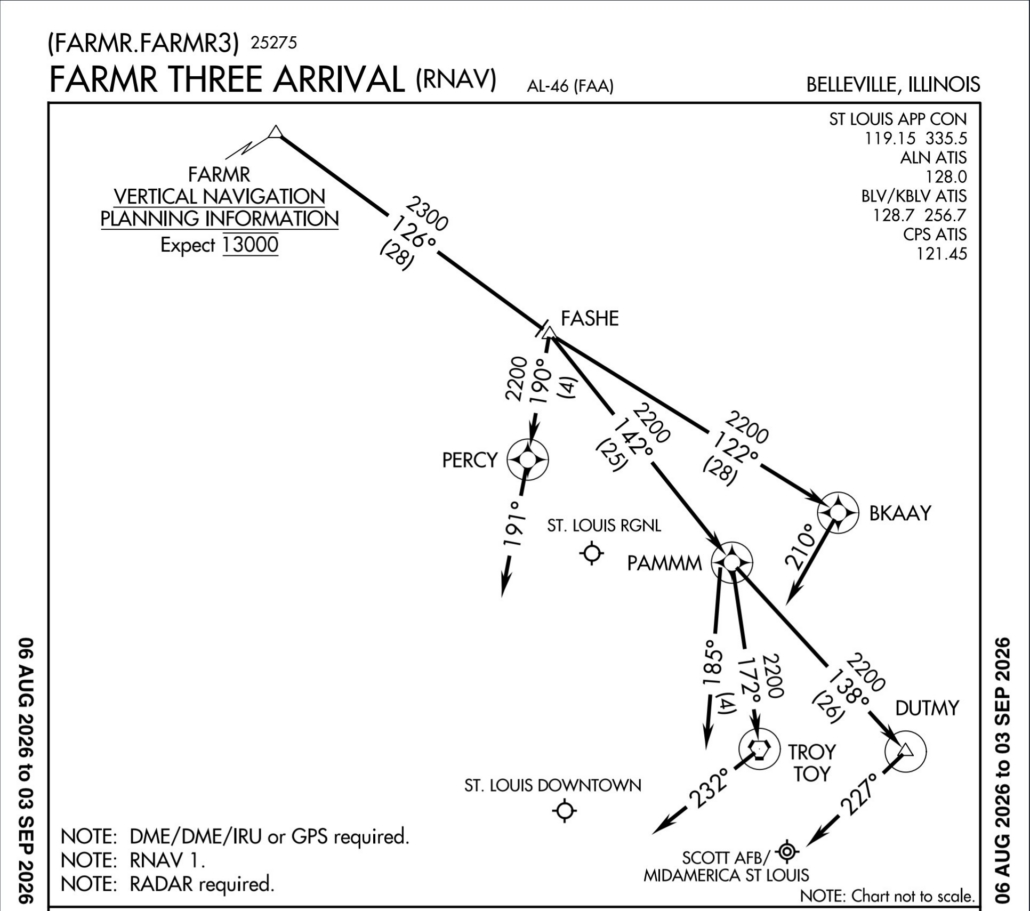
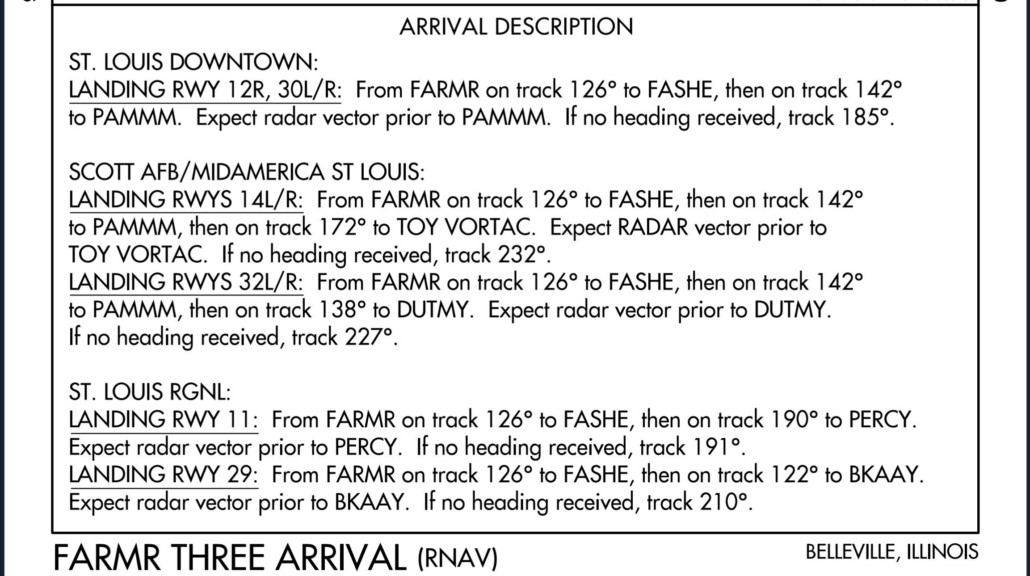
Route amendments are common, so review the charts and practice loading, activating and amending these on your avionics. That might include VNAV features on your GPS and autopilot, which are handy for crossing-altitude assignments. If you have GPSes 1 and 2 and can do quick changes, consider turning off the cross-fill to load a separate flight plan on the No. 2 with another possible route. This can help you find and spell a fix quickly to amend the active route, or even replace a flight plan. In fact, ATC often issues shortcuts on STARs when traffic allows and will clear you direct to an upcoming fix.

Managing Workload
It’s also common for ATC to break you off an arrival to vector you into an approach, so maintain situational awareness as you near a portion of the IAP. ATIS and preceding aircraft will give you early cues of what’s ahead. You might get instructions on airspeed, such as “maintain best forward speed” for spacing. In that case, the maximum IAS is up to you and ATC will monitor the situation. If told to “maintain 120 knots,” copy and comply. If you’re uncomfortable with any instruction, say “unable” and offer a compromise. If you can’t manage 120 knots, maybe 110 is workable. And even though they’re busy, controllers will address “say again” and requests to clarify routes or clearances. They do it for all types of aircraft. Sure, it’s best to minimize the transmissions and keep up with the flow, so this is where solid communications skills go a long way to help you fit into a fast-paced environment.
Along with ensuring you’re “up to speed” for this flight, your best line of defense is to manage workload. Take action the moment you feel you’re getting behind. If you’re not ready for that approach intercept, slowing down by 5–10 knots (or whatever you can) gives you that precious few seconds to check your setup. If you’re feeling rushed, you’re likely to start talking faster and pushing buttons quickly, making errors more likely. ATC has ways to help you buy time if you let them know. You can request speed changes, delay vectors, or even a hold at a fix that’s out of the way of the traffic flow. These tools are also available if there’s an issue you want to troubleshoot. This is why I like to step up my IFR fuel reserves when planning flights into busy airspace. Another reason to have as much fuel as practical is in case of delays that affect many aircraft at once, like thunderstorms or a sudden runway closure.
These strategies apply on the outbounds, too, starting on the ground. Like arrivals, SIDs (Standard Instrument Departures) can be part of a cleared route that uses all or part of the procedure. At St. Louis Regional, you’ll likely start with a departure heading and altitude followed by vectors towards a fix on the chart, as in the LINDBERGH NINE. This SID has three published transitions from the STL navaid for aircraft going southbound. All are straightforward, and you might get something even easier, like runway heading to 3000, then “cleared direct MYERZ” followed by a clearance to a fix on your route.
Training and Preparation
Some additional advice before flying in busy airspace:
- Assess your skills and get training to improve on navigation, communication, and IFR procedures. Adjust personal limitations accordingly, and be realistic. If you’re not fluent with ATC in non-congested situations, it only gets tougher in Bravo airspace. You might have a stressful experience or get behind the airplane, which is worse than getting behind ATC (back to aviate, navigate, communicate). Consider a VFR day to file IFR to a busy airport for the first time.
- Learn about the additional layers at the biggest airports. For example, the main St. Louis hub, Lambert International, has “D-ATIS” (Digital ATIS) broadcast in a robotic voice. There are multiple Ground and Tower frequencies based on your geographic location on the ground or direction of departure. Included is a Metering frequency to call before Ground; that controller coordinates aircraft about to taxi. To sample the real deal, you can listen to various frequencies online at LiveATC.net. Along that theme, study complex airport layouts to get an idea of what to expect. If you know a pilot who has been to the airport in question, you can gain a lot of valuable tips.
- Fix mistakes in stride and stay calm. Did you ever read back the wrong frequency? This happens all the time, even to airline pilots, and nobody gets upset. Be concise in your correction and move on. Need a phonetic spelling for a fix? Don’t be shy about asking – the pros aren’t, because they know that any doubts can be dangerous.
It’s all about good situational awareness and cockpit management in a busy environment. These flights are a great opportunity to build knowledge and skills, which will help ensure you can fully enjoy the conveniences of going into big-city airports.

- Keeping up: Managing Busy Airspace - September 9, 2026
- Into the Clouds: Hazards in Your Head - July 7, 2026
- A New Take on Alternates - May 12, 2026

Good morning
Great article
Question- how to you turn off Cross-fill and use the 2 GPS’s independently?
I fly an SR22 with perspective avionics
Thank you
Thanks for reading! Crossfill in this context refers to panels using two separate units, such as 2 GTN 650s, 430s or similar combination, that automatically sync flight plans and can be un-synced in the Aux menu. For the G1000, you can store backup flight plans or waypoints as a cheat sheet as these can be viewed on the side without blocking the moving map and the active route.