
The Instrument Cross-Check Is Bigger Than You Think
|
Getting your Trinity Audio player ready...
|
Building a deliberate flow for the modern IFR cockpit
The physical instrument scan has gotten smaller. The cross-check has gotten bigger.
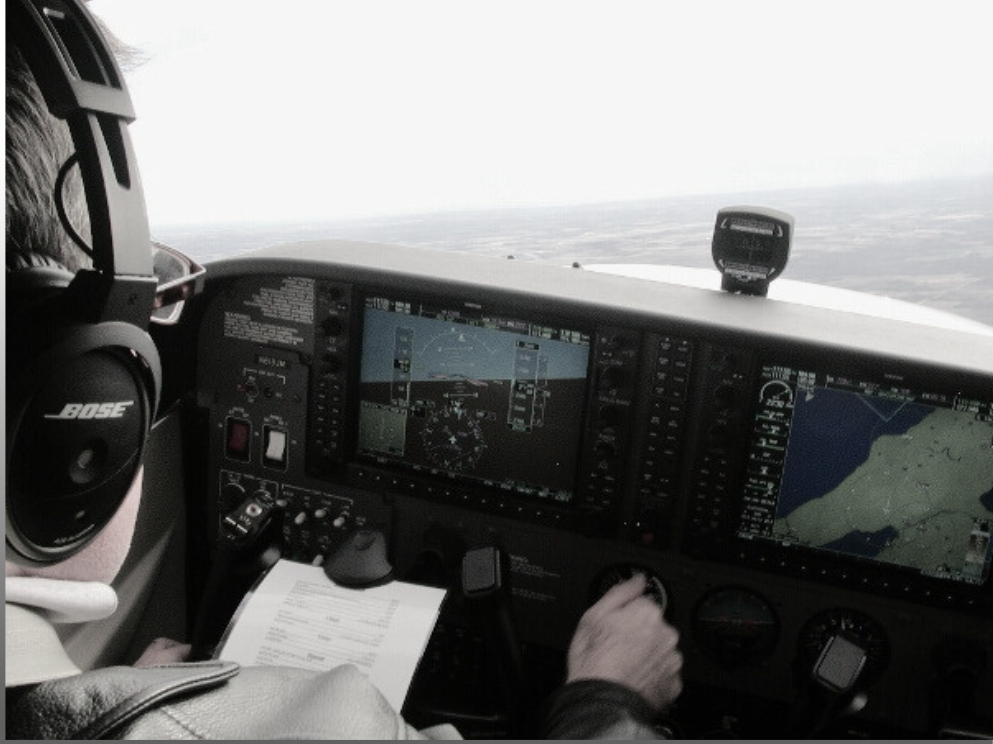
Mention “instrument cross-check” to most instrument pilots and they probably picture the scan learned during instrument training—attitude, airspeed, altitude, heading and the other flight instruments, perhaps with the attitude indicator at the center of a familiar hub-and-spoke pattern. That cross-check still matters. But this isn’t another article about how to scan the flight instruments, nor is it another debate about whether modern pilots rely too much on automation.
Instead, consider the cross-check more broadly: a deliberate flow of attention that follows the flight from engine start through shutdown. Its purpose is to maintain awareness of the aircraft’s flight path and support what the FAA calls Flightpath Management.
FAA Advisory Circular 120-123 defines Flightpath Management (FPM) as “the planning, execution, and assurance of the guidance and control of aircraft trajectory and energy, in flight or on the ground.” Although the AC is directed primarily at Parts 121 and 135 operators and Part 142 training centers, the FAA encourages other operators and training providers to consider its guidance as appropriate.
That definition works just as well in a technically advanced GA airplane. The instrument cross-check is the process. Effective Flightpath Management is the objective.
A Scan and a Flow
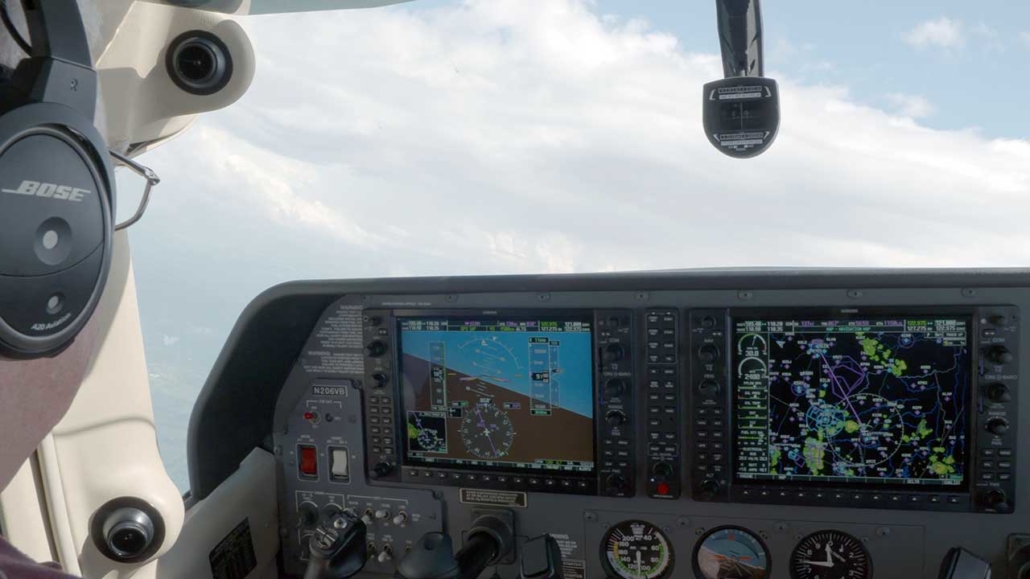
Modern glass cockpits have made part of the traditional instrument scan easier. Information that once required our eyes to travel around the panel is now consolidated on a PFD. The physical scan has gotten smaller, but the cognitive cross-check has gotten larger.
Now we also need to monitor the flight director, Flight Mode Annunciations (FMA), autopilot, active GPS leg, selected altitude, navigation source, engine and system indications, CAS messages, terrain, weather and configuration.
A modern instrument pilot needs both a scan and a flow. The scan tells us what is happening. The flow directs our attention toward the information most important to what the airplane is doing—or is about to do.
Three questions help keep that flow oriented:
What is the airplane doing?
What is the automation doing?
What should happen next?
Above all, keep coming back to the flight path.
Before Taxi
The cross-check begins before the airplane moves. Consider a deceptively simple checklist item such as “Radios/Avionics—As Required.” That should mean much more than tuning a frequency.
Listen to ATIS or AWOS, determine the runway in use and set the altimeter. Load the flight plan and compare it with the source used to plan the flight. I also like a gross-error check of total distance. If the flight-planning app shows 412 NM and the navigator shows about 410, that is reassuring. If it shows 869, stop and find out why.
After receiving the IFR clearance, act on each element that can appropriately be preset. If cleared runway heading, then as filed, maintain 3,000, departure 119.35 and squawk 1234, set those items and verify them. Don’t rely on memory for information that can safely be programmed in the avionics before taxi.
Takeoff and Climb
As the airplane aligns with the runway, verify the runway and heading. As power is applied, check engine indications, then airspeed. After liftoff, the emphasis shifts toward attitude, airspeed, flight path, engine indications and altitude.
The cross-check should also tell us where we are in the takeoff contingency plan briefed before departure. The available response to an abnormality can change dramatically as runway remaining and altitude change. Those decision points will differ among airplanes—including multiengine aircraft and CAPS-equipped Cirrus aircraft—but the principle is universal: know which options are available now.
Changes in the environment should change the cross-check too. Entering clouds or visible moisture should bring OAT, pitot heat and possible airframe icing into the flow. It should go without saying that encountering icing conditions in an airplane not approved for flight into known icing means finding another altitude or route—or otherwise exiting the icing conditions. In a FIKI-approved airplane, a trained and current pilot should be prepared to use the ice-protection systems in accordance with the POH.
Automation after takeoff requires the same discipline. Any autoflight change should trigger an immediate look at the FMA—the “scoreboard.”
Don’t verify the button you pushed. Verify the result.
I’ve been having turbine-transition students verbalize the FMA after any autoflight change. Select HDG, look at the FMA and say what is actually displayed. Arm NAV and verbalize what the FMA actually shows. The purpose isn’t to turn a single-pilot cockpit into an airline cockpit. Instead, this process helps build the discipline of looking at the FMA after every change. I like to say that the buttons you push are rumor. The FMA—the scoreboard—is fact.
Then return to the flight path. Continually compare what the autoflight system is doing with the desired and anticipated flight path of the aircraft.
Cruise: Look Ahead
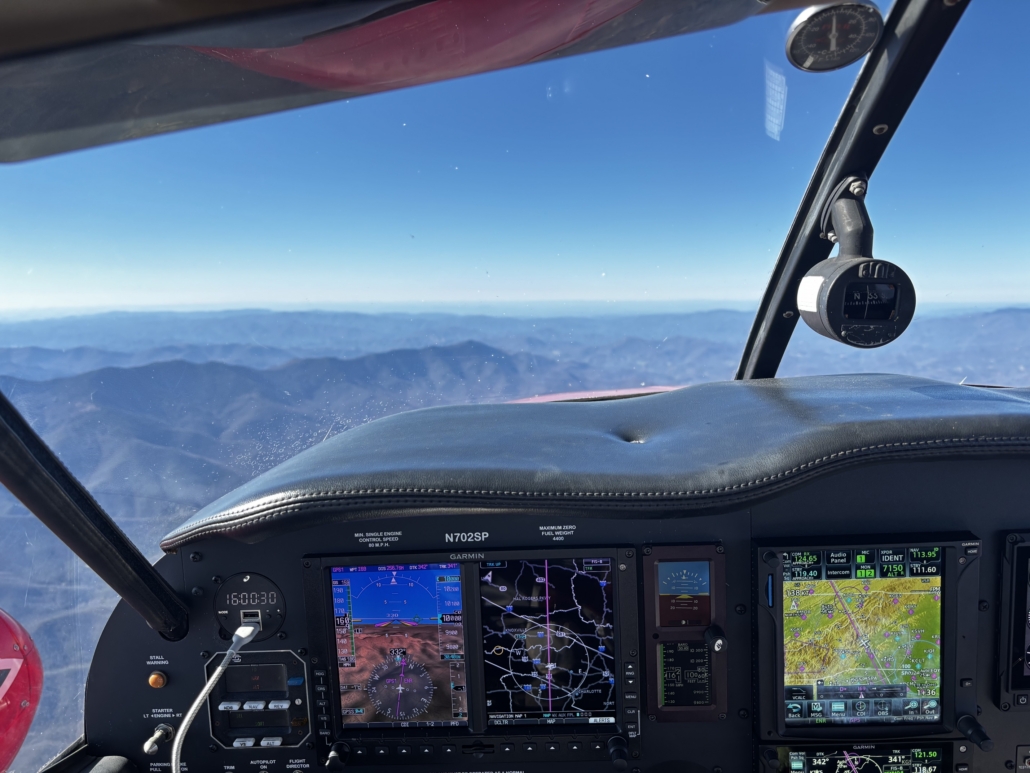
In cruise, the cross-check broadens and slows somewhat, but it never stops. Continue monitoring the flight path while periodically scanning engine and system indications, maintaining fuel awareness and planning, monitoring weather and avoiding developing threats, and requesting course or altitude adjustments necessary to provide a smooth ride for passengers.
Cruise is also the time to prepare for what comes next. Determine a top of descent. In an unpressurized airplane, I typically plan around a comfortable 500–600 fpm descent. In a pressurized turbine, a three-degree descent path is a useful planning baseline.
Before top of descent, obtain landing weather and brief the STAR, if applicable, and the planned instrument approach. Compare the procedure loaded in the GPS with the current chart. Verify the waypoint sequence, altitude and speed restrictions, and threats such as terrain and weather. Professional pilots try to have this work completed before TOD, because workload—and threats such as traffic and terrain—are about to increase. A good cruise cross-check doesn’t just monitor the flight you’re flying. It prepares you for the flight you’re about to fly.
Descent: Manage the Energy
Descent turns Flightpath Management into a three-dimensional challenge. We need to arrive at the landing field laterally and vertically positioned, but also at an airspeed and energy state that allow an orderly transition to the approach.
VNAV is an excellent tool for solving that problem. Many modern GPS navigators can provide VNAV guidance, and many modern autopilots can fly VNAV when selected. But VNAV does not relieve the pilot of managing the descent. It gives us another source of guidance to monitor and verify.
This becomes increasingly important at higher altitudes and in heavier aircraft. Some swept-wing airplanes, like the Boeing 757 I fly, simply cannot go down and slow down at the same time. Vertical planning matters.
The principle scales directly to GA: don’t let VNAV deliver you to the correct altitude with the wrong energy state.
Our goal is to arrive at the final approach fix at an altitude and airspeed that allow us to reach final landing configuration and establish a stable approach. Reaching the FAF at the correct altitude does little good if we are still above flap or gear-extension speeds and cannot get configured.
The cross-check therefore needs to look forward: Am I going to arrive there with an energy state that lets me configure and stabilize the airplane?
Approach: Verify What You Have
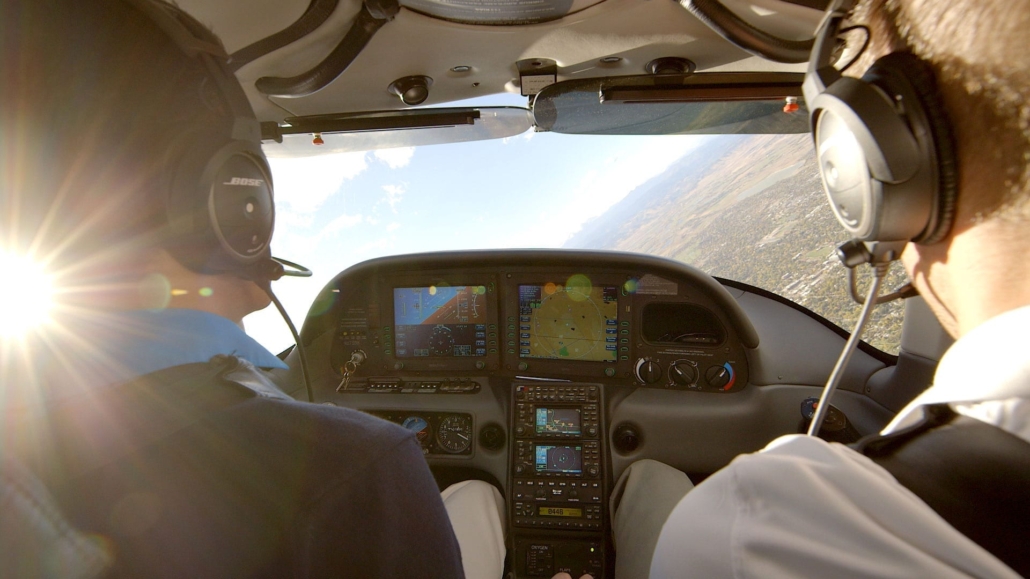
On an instrument approach, the cross-check should deliberately follow the waypoint sequence. As each waypoint approaches, know the altitude restriction, desired airspeed and configuration, and the automation change you expect next. Then verify that it actually happens.
For a ground-based approach, ensure the NAVAID is properly identified before relying on it for the approach. For an RNAV (GPS) approach, verify the level of service annunciated by the avionics and compare it with the minimums you briefed and set. If you briefed LPV, confirm that LPV is what the system is actually providing.
Inside the FAF, the instrument cross-check should confirm that we are maintaining a stable approach. A good target is to arrive at the FAF at an altitude, airspeed and configuration that make that possible, and to be stabilized no lower than the applicable gate—typically 1,000 feet AGL in IMC.
After Landing
The cross-check follows the airplane onto the ground. After landing, it transitions toward excellent situational awareness during taxi.
Use the airport diagram—preferably a moving map zoomed appropriately—to maintain situational awareness all the way to parking. At a towered airport, listen to and understand the taxi clearance, then compare it with the diagram. Identify the route, runway crossings, hold-short instructions and hot spots. At a non-towered airport, monitor the common traffic frequency to build a picture of other traffic while using the diagram to determine your taxi route and identify threats along it. The flying isn’t over just because the wheels are on the ground.
The Cross-Check Follows the Flight
The traditional instrument scan remains fundamental. A pilot trained entirely on glass should not assume that proficiency automatically transfers to conventional instruments, just as a pilot with an excellent traditional scan may need to develop a broader flow when transitioning to an integrated glass cockpit.
The answer isn’t less automation or more automation. It is disciplined Flightpath Management.
The cross-check should change as the flight changes, always directing attention toward what matters now and what will matter next. Every selection deserves verification. Every automation change should be checked against the FMA and then against the aircraft’s actual trajectory and energy state.
Keep asking:
What is the airplane doing?
What is the automation doing?
What should happen next?
The physical scan may have gotten smaller. The cross-check has gotten bigger.
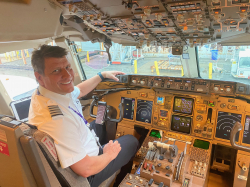
Tim helps pilots bridge the gap between earning an instrument rating and developing the operational proficiency needed for real-world IFR flying. His focus is on building the judgment, decision-making, and operational proficiency required to operate safely, legally, and efficiently in today’s National Airspace System.
Tim is passionate about mentoring owner-pilots and helping them apply the same practical techniques used in military, corporate, and airline flying to everyday Part 91 IFR operations.
Visit TimDeckerAviation.com to learn more.
- The Instrument Cross-Check Is Bigger Than You Think - October 6, 2026
- Before the Frequency Gets Busy - September 1, 2026
- The Checkride Was the Easy Part: Moving Beyond Certification to Operational Mastery - June 30, 2026

Leave a Reply
Want to join the discussion?Feel free to contribute!