
Before the Frequency Gets Busy
|
Getting your Trinity Audio player ready...
|
Professional Preparation for Single-Pilot IFR in Busy Airspace
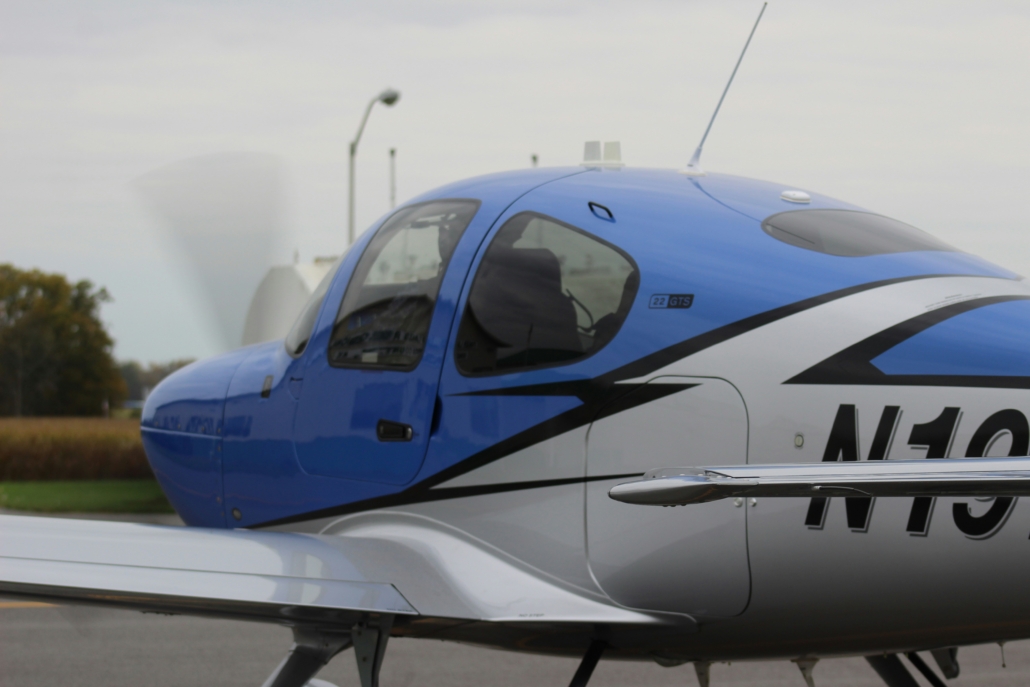
The phone call came from a recently instrument-rated Cirrus pilot sitting at a busy Class B airport with the engine running. He had received his IFR clearance, but he did not understand what Air Traffic Control had given him. The frequency was busy, the FBO line person was watching and waiting patiently to marshal him out of parking, and the pressure he felt was increasing by the minute.
His problem was not that he could not fly an instrument approach. He had recently demonstrated that skill well enough to earn an instrument rating. His problem was that he had never experienced an operation like this.
The FAA’s Instrument Airplane Airman Certification Standards establish the knowledge and skills required for certification, but no practical test can reproduce every environment a pilot may encounter afterward. Although the ACS requires knowledge of Standard Instrument Departures (SIDs), Standard Terminal Arrival Routes (STARs), climb gradients, and associated constraints, the practical test does not specifically require an applicant to fly an actual SID or STAR or demonstrate the “climb via” and “descend via” clearances that commonly accompany them. Nor does it require operations at busy Class B or Class C airports where these procedures are routine.
Nevertheless, after earning an instrument rating, a pilot may legally depart Atlanta, arrive at Dallas/Fort Worth, or fly into Chicago O’Hare. The pilot in my opening story was qualified, but he had not yet developed the operational experience necessary to manage that environment comfortably.
In Part 121 operations, complex environments are managed through standardization, preparation, defined procedures, and shared cockpit responsibilities. A single pilot does not have another crewmember available to catch an error or absorb part of the workload, but many of the same professional habits can be adapted to the Part 91 cockpit. The objective is to anticipate workload before it arrives.

Prepare Before Engine Start
Professional pilots do not wait for the cockpit to become busy before preparing. If departing a large airport, review the likely runway and SID before contacting Clearance Delivery. Understand the routing, altitude restrictions, climb gradient, navigation requirements, and what a “climb via” clearance will require.
Consider using services that provide Pre-Departure Clearance (PDC) and digital ATIS when available through a compatible avionics or electronic flight bag provider. Receiving the clearance and D-ATIS electronically allows time to review the routing, study the SID, and program the Flight Management System before starting the engine. The objective is not merely convenience. It is reducing workload before the airplane begins moving.
If a clearance received via PDC or radio does not make sense, ask ATC to clarify it. Do not allow embarrassment or concern about occupying the frequency to turn uncertainty into an incorrect clearance. Controllers would rather clarify or repeat an instruction than have a pilot misunderstand it.
Avionics proficiency is equally important. Modern FMS and GPS navigators make complex procedures manageable—but only when the pilot understands how to use them. Before operating in busy terminal airspace, become proficient at loading and modifying SIDs, STARs, transitions, and approaches. Busy airspace is not the place to learn those functions for the first time.
One common trap involves STARs that divide into runway-specific segments. When loading the arrival, the navigator may require selection of the expected landing runway. Without that selection, the route may end near the waypoint where the STAR branches rather than continue along the appropriate runway transition. Understand how the installed avionics handle these procedures before encountering them under time pressure.

Use Cruise Time Wisely
Professional pilots rarely regard cruise as the boring part of a flight. It is valuable preparation time.
Obtain the destination weather and ATIS early enough to complete arrival planning before beginning the descent. Review the expected STAR, including its altitude and airspeed restrictions, and prepare the most likely approach. If more than one runway or approach appears likely, identify an alternate rather than waiting for a change from ATC.
Even when expecting a visual approach, load and brief an appropriate instrument approach as a backup—preferably one with vertical guidance. Resist the temptation to load a GPS-generated visual approach if your navigator offers that option. At many busy airports, controllers expect aircraft to navigate to the Final Approach Fix associated with the published ILS or RNAV approach because that is where speed restrictions and sequencing are often built into the arrival. Airline crews are generally required to have an instrument approach loaded in the FMS even when cleared for a visual approach, so ATC may issue instructions referencing that procedure. Loading the corresponding instrument approach improves situational awareness, supports those instructions, provides a stabilized vertical path, and reduces the chance of landing at the wrong airport or runway.
Loading a procedure is only the first step. Verify that you’ve selected the correct runway and transition, then compare the programmed flight plan with the current published chart. Confirm the lateral routing, altitude constraints, airspeed restrictions, and missed approach procedure. In a two-pilot flight deck, both crewmembers independently verify the programming. A single pilot doesn’t have that second set of eyes, making an unhurried chart-to-screen comparison even more important.
The briefing should be concise and useful. Rather than reading the chart aloud, brief the applicable minimums and enter them into your avionics if that capability is available. Then concentrate on what is unusual or most likely to cause an error: localizer frequency identification and setup, a difficult crossing restriction, terrain, an offset final, parallel runways, a complicated missed approach, runway conditions, or the possibility of a late runway change.
The purpose of a briefing is not to prove that you can read the chart. It is to identify threats before they demand your attention, verify that the waypoints loaded in the FMS match the current chart, and confirm that the correct approach minimums have been entered.
Know When to Say “Unable”
ATC clearances are designed to maintain an efficient traffic flow, but controllers cannot know every aircraft’s limitations. STARs serving airline hubs may contain speeds around 290 knots to sequence transport-category airplanes. That may exceed the operating limitations of many smaller general aviation aircraft.
If your aircraft cannot comply, advise ATC promptly: “Unable the 290 knots.” The same principle applies to climb gradients, descent rates, crossing restrictions, or any other clearance beyond the capabilities of the aircraft or pilot.
“Unable” is not a sign of weakness. It is useful information and a sign of sound judgment.
If an unexpected change requires additional programming, tell ATC that you need time. A request for extended vectors or additional track miles is preferable to hurried button-pushing while the airplane continues toward the terminal area. If necessary, request holding until the new procedure can be loaded, briefed, and verified.
ATC controls the sequence, but the pilot still controls whether the airplane is ready to proceed.
Do Not Forget the Airport
Ground operations deserve the same preparation as the flight itself. Many instrument training flights take place at airports with relatively simple taxiway layouts. At large Class B airports, however, taxiways often have two-letter identifiers. At Dallas/Fort Worth, for example, a clearance might include Taxiways EM or EL. To a pilot encountering those names for the first time, the instructions may sound like a rapid string of unrelated letters.
Have the airport diagram open before the airplane moves. Review hotspots, anticipate the likely taxi route, and write down lengthy instructions. If uncertain, stop the aircraft and ask Ground Control for clarification.
Arrival planning should continue through landing and taxi. Before touchdown, anticipate the likely runway exit and know the general direction of parking. This is not the time to be asking yourself, “Do I turn off to the right or left?” At a large airport, the workload does not end when the wheels touch the runway.
Creating Time
Busy airspace is not challenging merely because controllers talk quickly or airports are large. It is challenging because several high-workload tasks can occur simultaneously, and ATC generally expects pilots to understand and promptly comply with the clearances they accept.
The pilot who first begins thinking about the arrival after top of descent will probably feel rushed. The pilot who has already reviewed the STAR, prepared an alternate approach, verified the avionics, briefed the threats, opened the airport diagram, and considered the taxi route will often find the same operation surprisingly manageable.
The objective is not to make a personal airplane operate like an airliner. It is to borrow the professional habits that allow airline crews to manage complex operations safely and efficiently.
Busy airspace rewards preparation and exposes its absence. Review the procedures early, understand the capabilities of your avionics and aircraft, brief the threats, and create additional time whenever the operation begins moving faster than you can safely manage it.
The frequency may be busy, but the cockpit does not have to be. Staying ahead of the airplane begins long before the controller starts talking quickly.

Tim helps pilots bridge the gap between earning an instrument rating and developing the operational proficiency needed for real-world IFR flying. His focus is on building the judgment, decision-making, and operational proficiency required to operate safely, legally, and efficiently in today’s National Airspace System.
Tim is passionate about mentoring owner-pilots and helping them apply the same practical techniques used in military, corporate, and airline flying to everyday Part 91 IFR operations.
Visit TimDeckerAviation.com to learn more.
- The Instrument Cross-Check Is Bigger Than You Think - October 6, 2026
- Before the Frequency Gets Busy - September 1, 2026
- The Checkride Was the Easy Part: Moving Beyond Certification to Operational Mastery - June 30, 2026

Leave a Reply
Want to join the discussion?Feel free to contribute!