
Half Sized Blog Element (Single Author Style)
Half Sized Blog Element (Multi Author Style)
New AIM Now Available, Highlights a Simple Way to Improve IFR Proficiency
The FAA has released Change 3 to the Aeronautical Information Manual (AIM), effective July 9, 2026. While this update includes only a handful of revisions, it’s a good reminder to make sure you’re always referencing the latest guidance—and Sporty’s makes that easy.
Practical IFR: ODP Versus VCOA (Visual Climb Over Airport)
Every airport that has a published instrument approach has also been surveyed for departures. It’s assumed that an aircraft will cross the departure end of the runway (DER) at 35 feet AGL, and climb to 400 feet AGL on runway heading, with a climb gradient of 200 feet per NM.

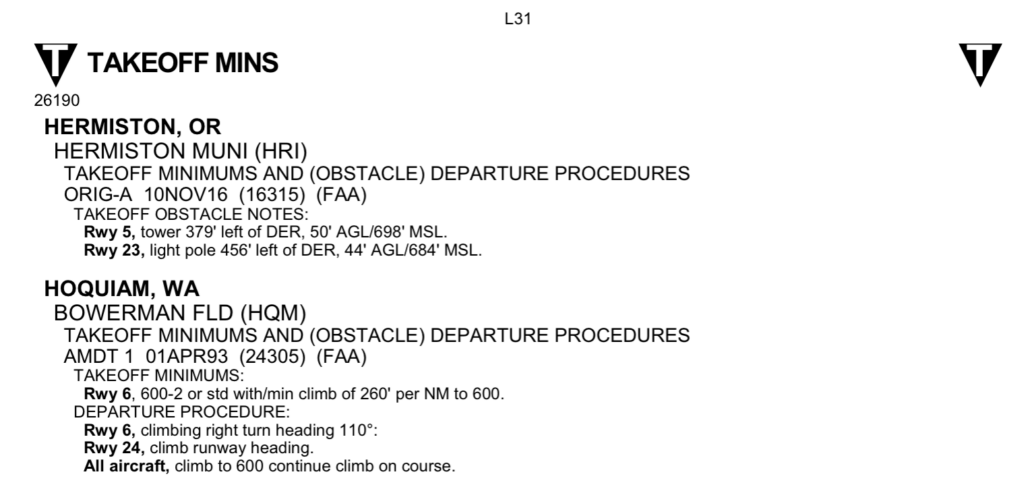
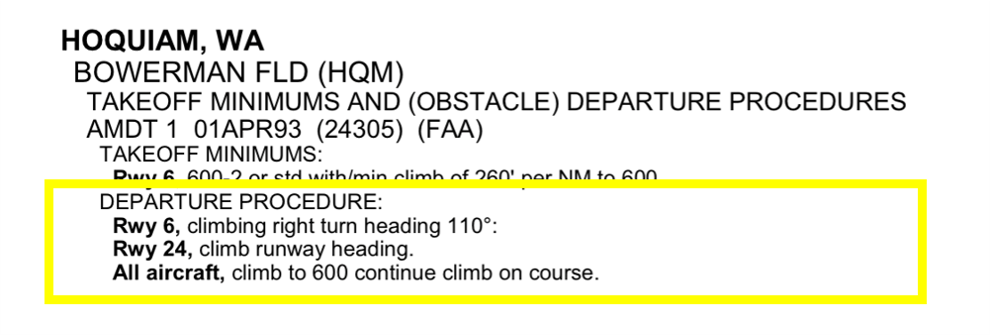 Wait: Does that mean you’re supposed to start a right turn as soon as you get airborne? No. It’s still assumed you don’t change from runway heading until 400 AGL, but then it’s a right turn to heading 110° for the next 200 feet—if you even get that big a heading change in only 200 feet. Regardless of the runway though, from 600 feet AGL and up, it’s a diverse departure.


New AIM Now Available, Highlights a Simple Way to Improve IFR Proficiency
/by Eric RadtkeThe FAA has released Change 3 to the Aeronautical Information Manual (AIM), effective July 9, 2026. While this update includes only a handful of revisions, it’s a good reminder to make sure you’re always referencing the latest guidance—and Sporty’s makes that easy.
Practical IFR: ODP Versus VCOA (Visual Climb Over Airport)
/by Jeff Van WestEvery airport that has a published instrument approach has also been surveyed for departures. It’s assumed that an aircraft will cross the departure end of the runway (DER) at 35 feet AGL, and climb to 400 feet AGL on runway heading, with a climb gradient of 200 feet per NM.